Sensory Sorted Review
Best Weighted Blankets for Autistic & ADHD Children
Five picks from budget to premium, with guidance on weight, filling, and washability.
Deep pressure can be transformative for sensory children, but the five main tools work differently and suit different moments. Here's how to choose.
I'm a parent, not an occupational therapist. Jude has ADHD and is a sensory seeker; we've used all five of the tools on this page at various points. This guide draws on that experience and on published OT guidance. If your child has complex sensory needs, a paediatric OT can assess which tools and weights are right for your specific child.
When Jude's OT first mentioned deep pressure, I thought she meant one thing: a weighted blanket. I didn't realise that "deep pressure" is a whole category of tools, each designed for a different context, a different body part, and a different type of child. It took me an embarrassingly long time to understand why the blanket that worked brilliantly at bedtime wasn't really the right choice for school, and why the compression vest that helped during the day wasn't the right thing for the car.
All five of these tools work on the same underlying principle: proprioceptive input. The body's nervous system uses deep pressure signals to build a clearer picture of where it is in space. For sensory-seeking children whose interoception and proprioception are under-responsive, this input is genuinely regulating: it calms the arousal level of the nervous system and reduces the need to crash, squeeze, and seek sensation through other means. For hypersensitive children, deep pressure sometimes feels good even when light touch doesn't, because it registers differently in the nervous system.
The question isn't whether deep pressure helps. For most sensory children, something in this category will be useful. The question is which tool, and when.
Before the comparison table, here's a one-line summary of each tool's purpose:
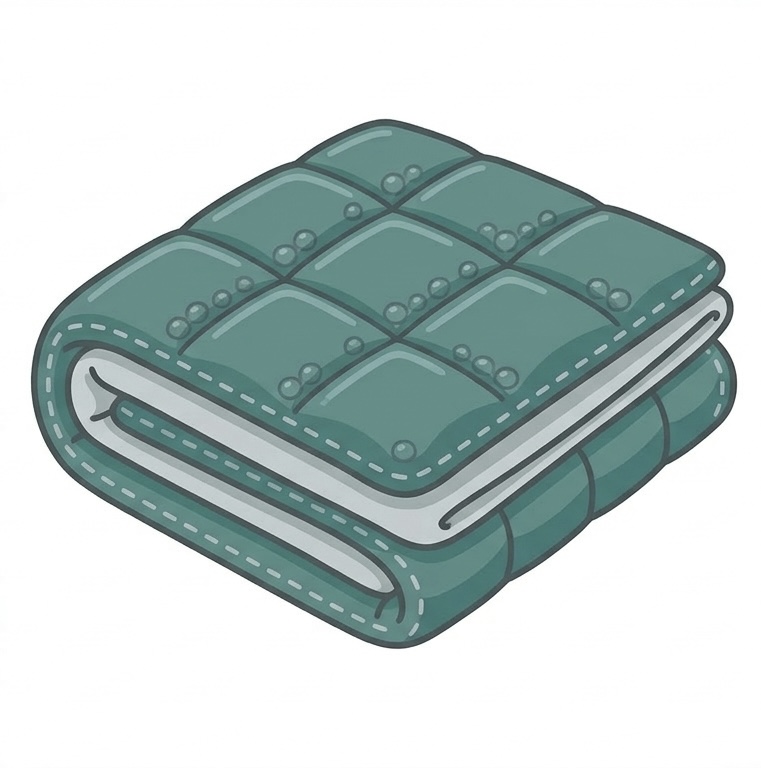
Full-body deep pressure. Best for bedtime, rest, and winding down after a hard day. The most powerful tool in the category.
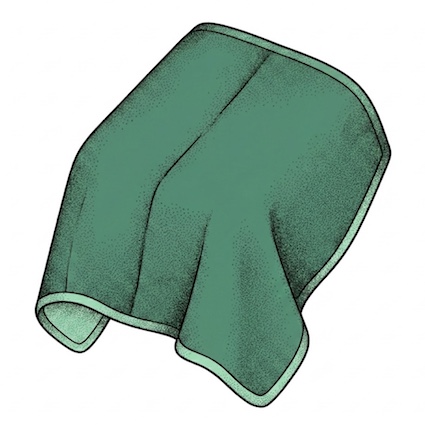
Focused pressure on the lap and thighs. Discreet, portable, and designed for concentration: at school, at homework, at mealtimes.
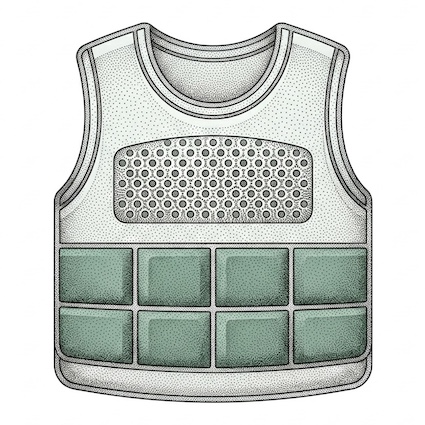
Even pressure across the torso, worn like a garment. The only tool that moves with the child, suitable for active, on-the-go use.
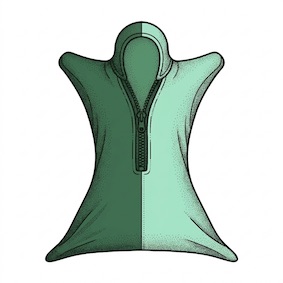
Whole-body proprioceptive input through resistive movement inside a stretchy bag. Most useful as a therapeutic play tool or in sensory sessions.
A comfort object with gentle weight. Lower therapeutic intensity than the others, but excellent as a soothing, portable companion, especially for younger children.
| Weighted blanket | Lap pad | Compression vest | Body sock | Weighted plush | |
|---|---|---|---|---|---|
| Coverage | Whole body | Lap and thighs | Torso and shoulders | Whole body (active) | Held area only |
| Best for | Sleep, rest, calming | School, homework, mealtimes | Active daytime use, school | Sensory play, therapy sessions | Comfort, transitions, anxiety |
| Portable? | Bulky — stays at home | Yes — fits in a school bag | Yes — worn under clothing | Needs space to use | Yes — pocket or bag |
| Discreet at school? | No | Yes — on the lap, under desk | Yes — under a school jumper | No — needs open floor space | Can be kept in a bag |
| Moves with the child? | No | No | Yes | During use only | Yes |
| Weight guideline | ~10% body weight | ~10% body weight | 5–10% body weight | Stretch resistance, not weight | ~10% body weight |
| Suitable age | 3+ (with supervision) | 3+ | 3+ (OT guidance recommended) | 3+ | All ages (size-dependent) |
| Typical UK price | £25–£80 | £15–£40 | £30–£60 | £15–£30 | £15–£35 |
| Where to start | If sleep is the main issue | If focus at school is the goal | If the child needs it during movement | If therapist has recommended proprioceptive play | If child needs something to carry and hold |
A weighted blanket is typically the first thing an OT suggests for a sensory child who struggles to sleep. The deep even pressure across the whole body mimics the feeling of being held, which is genuinely calming for most children with a sensory-seeking profile. The standard weight guideline is 10% of the child's body weight (so a 30kg child would use a 3kg blanket), though some children prefer slightly more and some less. Starting lighter is always safer.
The limitation is obvious: it stays in bed. You can't carry it to school, use it during homework, or take it in the car. Some parents use a weighted blanket on the sofa as a calming-down tool after school, which works well alongside a sensory tent or quiet space. But if the problem is focus during the day rather than sleep, a lap pad or vest will serve your child better.
One important note: avoid cheap single-layer blankets where the weight can shift and settle in clumps. The best weighted blankets use glass bead filling stitched into individual pockets so the weight stays evenly distributed regardless of how the blanket is used.
A weighted lap pad is the most practical tool for the school day. It sits flat on the lap, stays hidden under a desk, and provides a steady stream of proprioceptive input to the thighs and lower body without drawing attention. For children who rock, bounce, or get up repeatedly during tasks, the lap pad gives the nervous system something to register and can reduce that restless movement significantly.
Most lap pads are filled with glass beads or plastic pellets and are roughly the size of an A4 sheet. They fold flat for a school bag. Many UK schools already have them in SEN resource rooms, so yours may not need a fight. Introducing it through the SENCO with a note from an OT, if you have one, is usually straightforward. Lap pads are also effective at the dinner table and during homework, so one pad can genuinely cover multiple parts of the day.
A compression vest is the only tool in this category that goes where the child goes. It's worn like a waistcoat, under a school jumper if needed, and provides constant even pressure across the torso and shoulders throughout the day. For Jude, this was the most transformative change because it worked during PE, during break time, during the walk to school, not just when he was sitting still.
There are two main types: pocket-weight vests with removable weighted inserts, and bead-filled vests where the weight is distributed through the fabric itself. The bead-filled design tends to distribute pressure more evenly and avoids the lumpy-pocket problem, but it means the weight isn't adjustable. An OT can help establish the right weight range before you buy.
The standard guideline for compression vests is slightly lower than blankets: no more than 5–10% of body weight, because the pressure is more focused on the torso rather than distributed across the whole body. Always follow OT guidance here rather than guessing.
A sensory body sock works differently from the others. Rather than adding weight, it provides resistance: the child climbs inside a stretchy lycra bag and moves against the material, which gives the muscles and joints strong proprioceptive feedback. The input is intense and active rather than calm and passive.
This is not a sit-at-the-desk tool. Body socks are used in sensory rooms, in therapy sessions, and at home as a planned proprioceptive activity. They work brilliantly as part of a sensory diet for sensory-seeking children who need heavy-work input built into their day. Many children use them as a precursor to a calming activity: ten minutes of body-sock movement, then the weighted blanket or lap pad for settling.
A weighted stuffed animal is the most portable and the least therapeutically intense tool here. It's a comfort object that happens to provide gentle proprioceptive input, useful for children who are anxious, struggling with transitions, or need something to hold during overwhelming moments. The weight is lower than a full blanket, and the familiar, comforting shape makes it easier for younger children to accept than a vest or lap pad.
One thing worth being clear about: not all heavy plush toys are true weighted therapeutic tools. Warmies, for example, are under 1kg and are more of a warming comfort item than a deep pressure intervention. If you want genuine proprioceptive benefit, check that the stuffed animal specifies a therapeutic weight and meets the 10% body weight guideline for your child.
Yes. Most families end up using at least two, each in different contexts. The most common combination is a lap pad or compression vest for school and a weighted blanket for bedtime. Some children use a body sock as part of a morning sensory circuit before school and then keep a weighted stuffed animal in their bag for harder moments during the day.
The one thing to watch is cumulative weight. If a child is wearing a compression vest and also has a weighted lap pad, make sure the combined load still falls within safe limits. An OT supervising a full sensory diet will factor this in. If you're managing without an OT, err on the side of lighter rather than heavier.
A sensory profile is the most useful document to have when navigating these choices. It maps your child's specific responses across all sensory systems, so you're not guessing which tools fit their profile, and it gives any school, OT, or paediatrician a clear picture of what's already been tried and what helps.
Weighted lap pads and compression vests are both well-established in UK SEN practice. Most primary schools will accept them without requiring any formal documentation, especially if introduced through the SENCO. A note from your child's OT or paediatrician can make this process smoother and is worth requesting if you have the access.
If your child has a SEN Support Plan or EHCP, weighted tools used consistently can be written in as a reasonable adjustment under the Equality Act 2010. This means the school is obligated to provide or allow access to them, not just permit them when convenient.
The things I hear most often when families are navigating this category.