Handheld Chew Toys
The best handheld chew toys for children who chew everything that isn't a chew toy
P-shapes, Y-shapes, vibrating chews and chewable bangles. Oral-motor tools that give a chewing child something safer than their sleeves, pencils and shirt collars to bite down on.
✍️ Written by Sarah M.
🔗 Contains affiliate links
📅 Updated May 2026
⭐ Sarah's Top Pick
"Jude is a chewer. Pencil ends, jumper cuffs, the toggles on his coat. The Chewbuddy Stickman lives in his pocket and has saved more clothing than any other tool we own. It's firm enough to hold up to weeks of consistent chewing, small enough to be discreet at school, and the breakaway lanyard means it doesn't get lost. The first time he came home with a jumper I didn't have to mend, I knew we'd found a good one."
— Sarah M., on the Chewbuddy Stickman P-Shape Chew
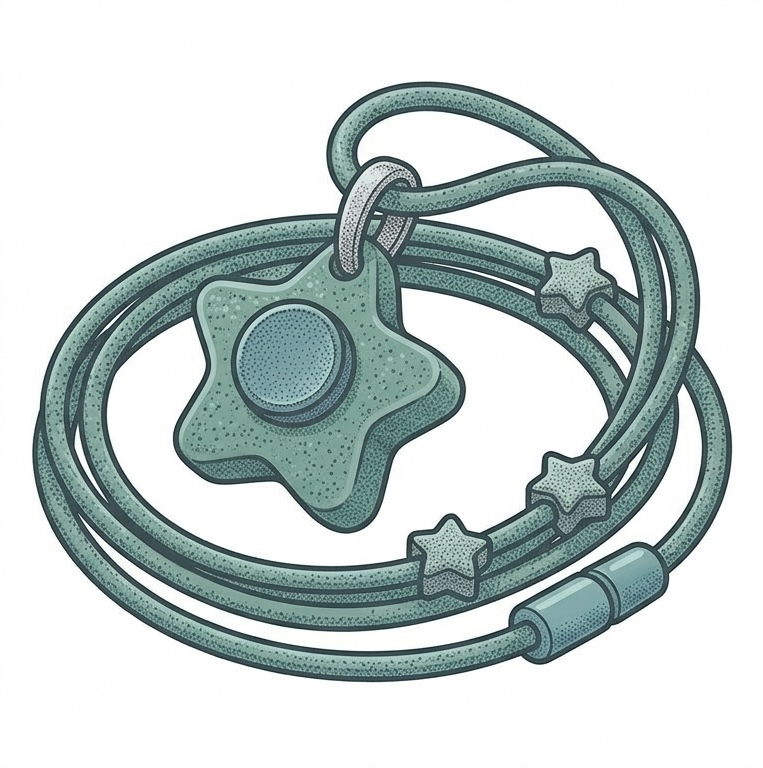
If your child chews everything they can get their teeth on, you don't need me to tell you what that looks like. You're already replacing jumper cuffs every term, finding chewed pencil tops in school bags, and watching them gnaw the toggle on a coat zip during a hard moment. I'm a parent, not an SLT, but I've spent years learning what helps Jude (sensory seeker, ADHD, the kind of chewer who can take a pen apart in an English lesson). Chewing is regulation. The pressure of biting provides proprioceptive input through the jaw, and that input calms a busy nervous system. Once you see it that way, the question stops being how to stop the chewing. It becomes how to redirect it onto something safe, designed for the job, and replaceable. Handheld chews sit in a pencil case, a school bag pocket or a hand. They're the bit of the chew-toy market that older children, classroom-conscious tweens and adults all reach for. If you're after something worn round the neck instead, our review of wearable chew necklaces covers the tethered side of the same job; most heavy chewers end up with both.
Our top picks
Five handheld chews worth considering, ranked from the most reliable everyday chew through to the discreet bangle for older children who don't want anything visible.
⭐ #1 Top Pick
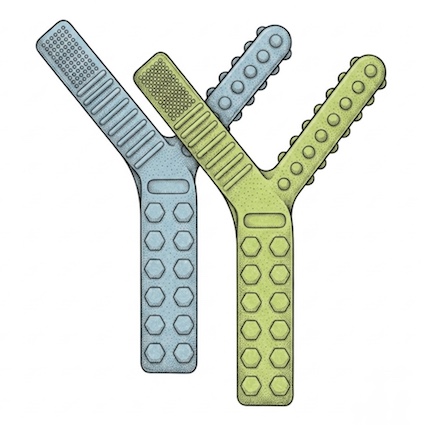
The Chewbuddy is a recognisable name in UK SEN circles for good reason. The Stickman is the firmer version of their bestselling P-shape chew, designed for moderate chewers who would chew through a softer chew quickly. Two chews per pack (blue and yellow) plus a breakaway necklace, so a child can wear it or keep it loose in a pocket. Made in the UK from medical-grade FDA-approved silicone, free of BPA, latex, phthalates and metals, dishwasher-safe, with both CE and UKCA approval. The shape gives a child several different chewing options in one tool: the loop top for back-tooth chewing, the stem for front-tooth gnawing, and the grippy textured surface for variety. At 10cm × 6cm it's small enough to be discreet but large enough not to disappear in a school bag. The brand have been making sensory products in the UK since 2005, and the consistency of the build quality shows. This is the chew I'd buy first if I was buying just one. If your child is a softer or less consistent chewer, Chewbuddy do milder versions in the same range.
Pros
- UK-manufactured, established SEN brand
- Firm version handles moderate chewers
- Two chews and a breakaway lanyard included
- CE and UKCA approved, medical-grade silicone
- Dishwasher-safe, easy to clean
Cons
- The firm version is too hard for very young children
- Aggressive chewers will still wear it down over time
- Plain shape rather than visually appealing to a child
Check Price on Amazon →
#2
A budget multipack from Hoaisun, four Y-shape silicone chew tubes in mixed colours from a range that includes red, orange, yellow, green, turquoise, blue, purple and grey. The Y-shape gives three prongs to chew on rather than one, with four different textured surfaces across the tubes (small bumps, ridges, smooth and ribbed). For families with one heavy chewer who loses things, or for households with more than one chewer, this multipack is the most cost-effective way in. Food-grade silicone, free of BPA, latex, lead, PVC and phthalates. Easy to clean by rinsing or popping in the dishwasher. The trade-off for the lower price is that these are less established as a brand than Chewbuddy, the textures are slightly less varied than premium options, and quality between the four pieces in a pack can vary. For a school-bag chew that won't be a disaster if it gets lost, that's exactly the right trade-off. Suitable for moderate chewers, not aggressive ones.
Pros
- Four chews per pack: best per-unit price
- Y-shape with three chewing prongs
- Mixed colours and textures across the pack
- Food-grade silicone, dishwasher-safe
- Useful for households with more than one chewer
Cons
- Lesser-known brand than Chewbuddy or GAFLY
- Build quality can vary across the four pieces
- Not for aggressive chewers
Check Price on Amazon →
#3
The premium multipack option, and the highest-rated chew on this list. GAFLY supply five chews in a pack, mixing X-shape and Y-shape tubes in red, blue, yellow and green. Each tube carries three different textures across its sides (raised bumps on one side, small ridges on another, smooth on the third), so a single chew offers three different sensory experiences. That texture variation is what justifies the premium over the Hoaisun multipack: a child who likes one texture for calming and another for alerting can switch within the same chew rather than between two different products. GAFLY position themselves as a specialist brand in the autism and developmental disabilities space, and the build quality is noticeably better than budget multipacks. Food-grade silicone, free of parabens, SLS and phthalates. The included clasp and cord are intended to attach the chew to a bag or clothing rather than to be chewed themselves. A solid choice for a family wanting a higher-quality multipack that will last longer than the budget options, particularly where you want to keep one chew at home, one in the school bag, and one as a back-up.
Pros
- Highest Amazon rating in this group (4.6)
- Five chews mixing X and Y shapes
- Three textures per individual tube
- Better build quality than budget multipacks
- Specialist brand with autism focus
Cons
- Significantly more expensive than the Hoaisun pack
- Five may be more than a one-child household needs
- US brand: customer service routes for UK buyers less clear
Check Price on Amazon →
#4
Different category of tool from the silicone P-shape and Y-shape chews above. The LoveHugs vibrating chew is for children who specifically benefit from vibration-based oral input, and is often recommended in feeding therapy and oral-motor work to support bite strength, jaw mobility and oral sensitivity. Three vibration settings let you match the input to the child, and the chew is USB-rechargeable rather than battery-powered (no batteries to lose, no battery hatch to come open in a child's mouth). Pastel green, food-grade silicone, free of BPA, latex and phthalates. The trade-offs are real: it's a more specialist tool than a regular chew, the vibration motor adds a point of failure that pure silicone chews don't have, and the lower 4.3 rating reflects a wider mix of use cases (the listing markets it for both sensory chewing and infant teething, and reviews from those two groups can pull in different directions). My honest position: this is the right pick if your child has been advised by an SLT or OT to use a vibrating chew, or if your child responds noticeably to vibrating input on other toys. If you're buying a first chew with no specific guidance, start with one of the silicone chews above instead.
Pros
- Three vibration settings to suit different children
- USB rechargeable: no batteries to manage
- Used in feeding and speech therapy contexts
- Food-grade silicone, water-resistant
- Distinctive sensory experience vs static chews
Cons
- Lowest rating in this group (4.3)
- Listing covers both sensory and teething uses
- Vibration motor adds a point of mechanical failure
- Most expensive single-chew option here
Check Price on Amazon →
#5
For older children, tweens and teens who don't want anything visible round their neck or coming out of a pencil case. The ChewAid bangle is a chewable silicone wristband sized to look like ordinary jewellery, available in red, pink, turquoise and dark green (specific colour stock varies on Amazon). The discretion is the point. A child who masks at school (and most of them do, in some form, which we cover in the masking guide) often won't accept a chew that signals "I'm different" to classmates. A bangle on the wrist looks like a bracelet. It's there when needed, invisible when not. The chew is firm but not the firmest on this list, which makes it suitable for moderate chewers rather than aggressive ones; ChewAid are explicit on the listing that no chew tool is indestructible and that intense chewing will wear it down faster. FDA-compliant silicone, free of BPA, latex, phthalates and PVC. One bangle per pack. The rating of 4.4 reflects a smaller review pool than the other products on this list, and it's worth knowing that wear is to be expected and the bangle will need replacing periodically. For a self-conscious older child who needs to chew but doesn't want to be seen chewing, this is the answer.
Pros
- Looks like ordinary jewellery: maximum discretion
- Strong fit for older children, tweens and teens
- Several colour options to suit personal style
- Cheapest single-chew on the list
- FDA-compliant medical-grade silicone
Cons
- Single bangle per pack: lose it and you start over
- Not suitable for aggressive chewers
- Smaller chewing surface than P-shapes or Y-shapes
- Colour stock on Amazon varies
Check Price on Amazon →
What to think about before you buy
Chew toys are inexpensive but matching the chew to the child matters more than the price. A few things to consider before you order.
💪
Match the firmness to the chewer
Soft chews suit mild chewers (the occasional sleeve, hair-twirling). Medium chews handle moderate, through-the-day chewers. Firm chews (like the Chewbuddy Stickman) are for moderate-to-aggressive chewers who would destroy a softer one within a week. No chew is truly indestructible, and any chew used by a strong chewer will need replacing periodically. A useful pattern: start medium, and go firmer if the chew shows visible damage in the first week.
🎒
Discretion at school
Older children especially are conscious of looking different in front of peers. A chewable bangle, a small chew kept in a pencil case, or a pendant tucked under a school jumper all read as much less conspicuous than a visible chew. Speak to the SENCO before sending one in: most UK schools allow chews as a reasonable adjustment for sensory needs, particularly with an SEN support plan or EHCP. The conversation usually goes better if you bring the chew with you so they can see what it actually looks like.
🧼
Cleaning and replacement
All silicone chews are dishwasher-safe (top rack), and most can be sterilised in boiling water. A daily rinse and a weekly proper clean is enough for most school-use chews. Inspect chews regularly: deep cracks, gouges, or pieces coming away are the signal to replace. Vibrating chews are water-resistant rather than waterproof, so wipe the silicone surface but don't submerge the motor unit. Plan to replace heavy-use chews every two to three months.
🍽️
Chewing and feeding therapy
If your child is working with an SLT or OT on feeding, oral-motor or speech goals, ask which chew they specifically recommend before you buy. Vibrating chews and certain shaped chews are sometimes used as part of a wider therapeutic plan, and getting the right tool matters more in that context than picking the most popular one. The same applies if your child has significant sensory food issues: a chew can support oral exploration as part of food chaining work.
📿
Handheld vs necklace vs bangle
A handheld chew goes in a pocket or pencil case and is brought out when needed. A chew necklace is worn all day on a breakaway lanyard, always available, harder to lose. A bangle is on the wrist, the most discreet option but with a smaller chewing surface. Most heavy chewers end up with more than one form, used in different settings: a necklace at home and during meltdown, a bangle at school, a handheld in the car. Buying one of each as an experiment is rarely a wasted £40.
🧠
Why chewing helps in the first place
Chewing is one of several ways to deliver heavy work to the body. The pressure of biting provides proprioceptive input through the jaw, which has a calming and organising effect on the nervous system. That's why a chewing child often is, or appears to be, concentrating. A chew toy isn't a vice to be discouraged; it's a regulation tool that happens to look like fidgeting. Our guide on building a sensory diet covers oral input alongside the other heavy-work activities (jumping, pushing, carrying) that pair well with it.
Frequently asked questions
The questions parents ask us most about handheld chew toys and chewable bangles.
Why does my child chew on everything?
Chewing is a regulation strategy. The pressure of biting down provides what occupational therapists call proprioceptive input through the jaw, and that input is calming for many neurodivergent children. Children who chew sleeves, pencils, fingers, hair or shirt collars are not being naughty or destructive: they're seeking a sensory input that helps their nervous system settle. Once you recognise that, the question stops being how to stop the chewing and starts being how to give them something safer to chew on. A handheld chew toy or chewable bangle is exactly that.
What's the difference between a chew necklace and a handheld chew?
A chew necklace is worn on a breakaway lanyard around the neck, so it's always available without anything to lose. A handheld chew is held in the hand or kept in a pocket, school bag or pencil case. Necklaces work well for younger children, for children who chew throughout the day, and for situations where the chew needs to be tethered (school, soft play, anywhere a dropped chew would be lost). Handheld chews work better for older children who don't want something visible round their neck, for children who only chew at certain times (homework, lessons, car journeys), and for adults. Most families with a heavy chewer end up with both.
What ages are handheld chew toys suitable for?
Most handheld chew toys are suitable from around age three upwards, though listings vary. Younger children should use chews under direct supervision. Primary-school children and teens are the largest group of users, and chews are also commonly used by adults with ADHD or autism who chew pens at work. Always check the specific product listing for the manufacturer's recommended age, particularly for chews that come in two-packs or four-packs where individual pieces may be small. Vibrating chews and any chew with electronic components carry their own age guidance and shouldn't be left unsupervised with very young children.
How do I know what hardness my child needs?
Most chew toys come in a soft, medium or firm version, sometimes labelled XX (firm), XXX (extra firm) or just by colour. Mild chewers (chewing sleeves, hair, occasional pencils) usually do well with soft to medium chews. Moderate chewers (consistent through-the-day chewing, leaving teeth marks on objects) need medium to firm. Aggressive chewers (chewing through pens, leaving deep bite marks, going through chews quickly) need the firmest options, sometimes labelled "for moderate to aggressive chewers," though no chew is truly indestructible. If you're unsure, start with a medium and watch how it wears: if it shows damage within a week, go firmer next time.
Can my child take a chew toy into school?
Most UK schools will allow a chew toy as a reasonable adjustment, particularly if it's discreet (a bangle, a small handheld chew kept in a pencil case) and the child has a sensory profile or SEN support plan. Speak to the SENCO before sending one in, ideally with a brief note explaining what the chew is for. Schools that resist are usually concerned about distraction or hygiene; both can be addressed by choosing a quieter, classroom-friendly chew and committing to regular cleaning. If your child has an
EHCP, sensory tools including chews can be specified as part of provision.
How do I clean a handheld chew toy?
All silicone chews are dishwasher-safe (top rack), and most can also be cleaned by rinsing in hot soapy water or sterilised in boiling water. Daily rinse and a weekly proper clean is usually enough for a school-bag chew. Vibrating chews are water-resistant rather than waterproof: clean the silicone surface but don't submerge the motor unit. Inspect chews regularly and replace them when you see deep cracks, gouges, or pieces coming away. The signs that a chew has reached the end of its life are visible: when in doubt, replace it.