Product Review
Best Ear Defenders for Children
Our top picks for noise-sensitive kids, chosen for comfort, fit and effectiveness.
It's not a tantrum. It's not attention-seeking. Here's what's really happening when your child hits their limit, and the practical things that make a difference.
I'm a parent, not a professional. This guide draws on my own experience with Ella and Jude, and on published information from the National Autistic Society, Ambitious About Autism, Just One Norfolk NHS, and Action for Children's Parent Talk service. It's not clinical advice. If your child's sensory overload is severe or significantly affecting daily life, please speak to your GP or SENCO about a referral to occupational therapy.
Ella was six when we had our worst one. A birthday party: well-meaning, enthusiastic, completely overwhelming. About forty minutes in she went from chatty to quiet to absolutely nowhere-to-be-found, and I found her wedged behind a coat rack in the hallway, hands over her ears, completely unreachable. We left. I carried her to the car. She didn't speak for the rest of the afternoon.
At the time I didn't have a name for what had happened. I knew she'd "got upset" and that the party had been "too much," but I didn't properly understand what "too much" meant in neurological terms. Once I did, everything, the coat rack, the silence, the time it took her to come back to herself — made complete sense.
If your child has ever hit a wall in a noisy place, or gone from fine to not-fine with terrifying speed, this guide is for you.
Our brains are constantly receiving information from our senses, not just the obvious five (sight, sound, smell, taste, touch), but also our sense of movement and balance (vestibular), our sense of body position (proprioception), and our sense of what's happening inside our bodies (interoception). For most people, the brain filters this incoming stream and lets only the most relevant information through to conscious awareness.
In children with sensory processing differences, particularly autistic children and those with ADHD. This filtering system works differently. The brain lets too much through, or processes sensory information more intensely than expected. When the volume of input exceeds what the nervous system can manage, it hits overload.
The National Autistic Society describes sensory overload as what happens when sensory hyper-sensitivity combines with too many triggers at once, and notes that for some autistic people, being overwhelmed in just one sense can be enough to trigger it.
It's a neurological response, not a behaviour choice. Your child isn't overreacting. Their brain is genuinely struggling to cope with what it's receiving.
Think of it like a circuit breaker. Once the load exceeds capacity, something trips. The system either shuts down to protect itself, or misfires. That's what you're seeing when your child melts down or withdraws completely, not defiance, not attention-seeking, but a nervous system that has reached its limit.
Sensory overload doesn't look the same in every child, and it doesn't always look the same in the same child on different days. Just One Norfolk NHS notes that some children show a visible build-up of distress before they hit overload, while others seem to go from calm to overwhelmed in seconds. Some children have the awareness to signal when things are getting too much; many don't.
The signs fall into two broad patterns: those that look like explosion, and those that look like collapse.
Hands slapped over ears, squinting, turning away from lights, the child is physically trying to reduce the input.
Snapping, lashing out, crying at things that normally wouldn't register. Their tolerance is used up; there's nothing left in reserve.
Full emotional overwhelm — intense crying, shouting, physical responses. The child has lost the ability to regulate and isn't in control of what's happening.
Running out of rooms, hiding, refusing to stay in the environment. The brain is trying to do what the child can't yet ask for: get away from the source.
Rocking, flapping, spinning, humming — more intensely than usual. Stimming can be a self-regulating response, so an increase often signals rising stress.
Headaches, tummy aches, feeling sick, the body responds to sensory overwhelm. These aren't made up to avoid something.
The child stops responding, stares, becomes unresponsive to their name. This is shutdown, the nervous system pulling in, not out.
Suddenly needing to be physically attached to you. The person they trust most becomes the only safe thing in an overwhelming world.
Processing sensory overload takes real energy. Children can become wiped out very quickly when overwhelmed.
Small spaces, under tables, inside wardrobes, the child is seeking an environment with less input, instinctively.
Jude tends towards the first list — big, noisy, outward. Ella almost always goes the other way: she goes quiet, she shrinks, she disappears. I used to find shutdown harder to spot than meltdown, because it doesn't demand your attention in the same way. Worth watching for both.
Triggers are highly individual. What overwhelms one child might not touch another, even with the same diagnosis. Even so, there are patterns. Ambitious About Autism notes that sensory overload can involve more than one sense at once, and that certain environments stack multiple sensory demands on top of each other, making them particularly high-risk.
Places that commonly trigger overload: school assemblies, supermarkets, shopping centres, soft play, birthday parties, busy restaurants, hairdrressers, fireworks displays, and, particularly for kids who've been holding it together all day, the journey home from school.
Sensory specifics to watch: fluorescent lighting, crowds and unpredictable movement, strong smells (canteens, cleaning products, perfumes), clothing tags or tight waistbands, background noise (music, TVs, chatter), unexpected touch, and transitions between activities.
One thing that's easy to miss: it's not always about the loudest or most obvious thing in the room. Ambitious About Autism notes that some autistic people find that being overwhelmed in a single sense, even one that might seem minor. It can be enough on its own. A flickering strip light overhead. The smell of someone's lunch. The texture of a chair they have to sit on. Any of these can be the thing that tips the balance.
"Ella's worst trigger is unpredictability, not knowing what's coming next. It's not even necessarily that things are loud or bright; it's that she can't prepare for them. An unexpected change of plan in a sensory-neutral environment can set her off just as badly as a noisy one. Understanding that helped me stop focusing only on obvious sensory factors."
When a child is in the middle of sensory overload, the brain is not in a state to respond to reason, instruction, or consequence. The prefrontal cortex, the part that handles language, decision-making, and emotional regulation goes offline when the nervous system is overwhelmed. This is why trying to talk your child through it rarely works in the moment.
What works is reducing the load, not adding to it.
Get to a quieter space if you can. Dim lights, turn off background noise, move away from crowds. If you can't leave the environment, create a smaller, calmer bubble within it. Even a corner with their back to the room is better than nothing.
Speak quietly and slowly. Use short sentences. Don't ask questions or give instructions. Your voice is also sensory input. The calmer and quieter you are, the less you're adding to what they're already processing.
This is not the moment for "calm down," "use your words," or "we're not leaving until you..." Every demand adds cognitive and emotional load on top of sensory load. Let everything go. The goal right now is safety and de-escalation, nothing else.
Rocking, flapping, humming, pacing. These are self-regulation strategies. Let them happen. The National Autistic Society is clear that stimming serves a purpose; it's not something to stop during overload.
Stay nearby so they know you're there. Some children want physical contact (a hand, a weighted lap); others find any touch overwhelming in that moment. Know your child. You can say quietly, "I'm right here. You're safe. Take your time." Keep it brief and low-key.
Once the storm has passed and your child is calm, you can gently revisit what happened, but not straight away. Just One Norfolk NHS suggests this can be useful for helping children learn to recognise their own warning signs over time. But it needs to happen much later, not in the aftermath.
Prevention is always better than crisis management, though anyone who's been parenting a neurodivergent child for five minutes knows that prevention isn't always possible. Still, there are things that shift the odds.
Ambitious About Autism encourages parents to work with their child to identify their personal early signals, the things that happen before full overload that can act as a yellow flag. For some children, it's a change in how they're walking. For others, it's going quieter, or talking faster, or starting to pick at their skin. Once you know the yellow flags, you can respond before things escalate rather than after.
Give advance warning before anything that's likely to be demanding. Talk through what to expect, who will be there, what the noise might be like, what happens if it gets too much. Having an exit plan that your child knows about in advance (even something as simple as "if you need a break, come and find me and we'll go outside for five minutes") can dramatically reduce anxiety going in.
After any sensory-heavy experience (school, a trip out, a busy social situation) build in genuine downtime before the next thing. This is especially true after school (see our guide on after-school restraint collapse). The tank needs refilling before you can ask anything else of it.
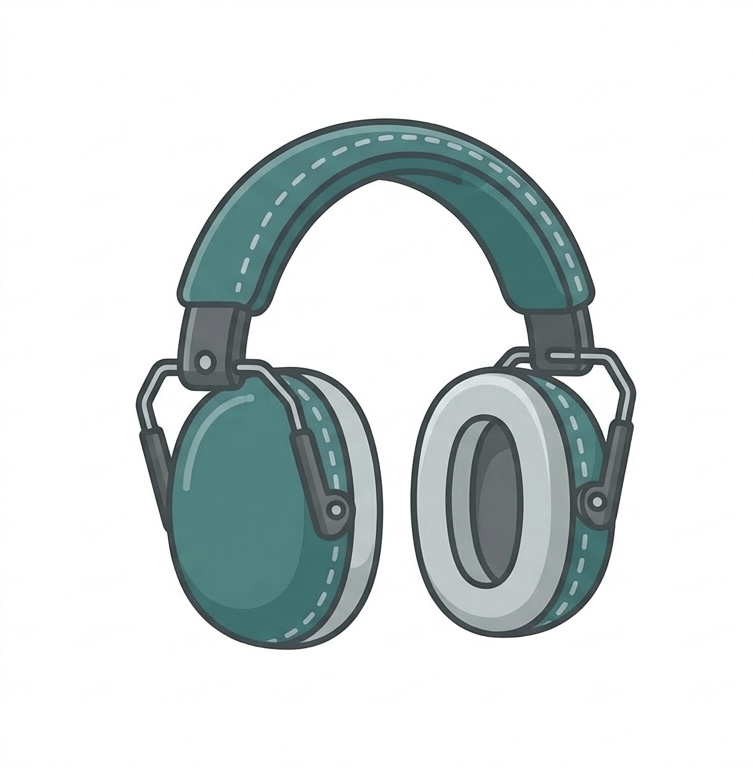
Ear defenders in noisy places, chewable jewellery for oral input, a weighted lap pad or weighted stuffed animal for portable grounding. These aren't just for when things are already going wrong. Used proactively, they reduce the sensory load before the threshold is reached. A good sensory diet planned with an occupational therapist can also help regulate your child's nervous system over time, giving them more capacity to handle demanding environments.
School is one of the highest-risk sensory environments most neurodivergent children face, every single day. Fluorescent lighting, noisy corridors, unpredictable assemblies, busy canteens, crowded playgrounds, and the sustained effort of masking all day combine to make it genuinely exhausting for many sensory-sensitive children.
If your child is struggling with sensory overload at school, it's worth talking to their SENCO about what adjustments might help: things like access to a quiet breakout space, sensory breaks built into the day, permission to wear ear defenders in corridors, or altered lunchtime arrangements. If your child has an EHCP or SEN Support plan, provisions like these can be written in. Our guide to SEN Support and EHCPs walks through how that process works.

A few things that come up often.
Sign up and I'll send you a free two-page PDF — the eight sensory tools I'd recommend to any family dealing with overload, with what each one does and rough price ranges.