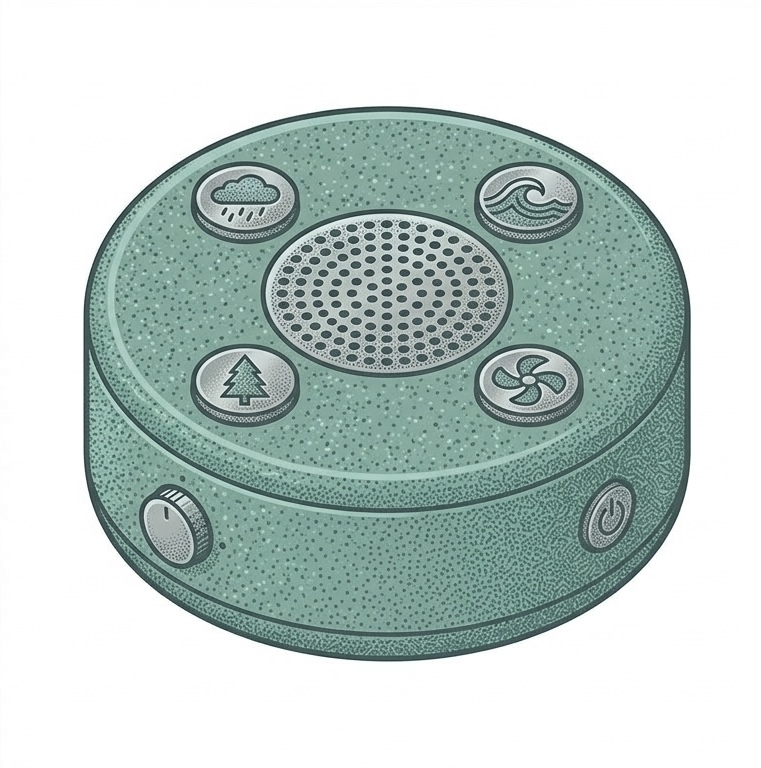
A white noise machine works on a simple principle: a steady, predictable sound layer hides the unpredictable ones, the car door slamming at 11pm, the boiler clicking on, the older sibling closing the bathroom door. For a sound-sensitive child whose nervous system flags every small noise as a potential threat, that masking layer can be the difference between sleeping through and waking eight times. Ella's first decent night's sleep in months came from a £30 sound machine. I'm not a sleep consultant, just a parent. I can tell you that for us, this was the single highest-impact sleep intervention we ever tried, alongside her weighted blanket. White noise also has daytime uses worth knowing about, particularly for children who already use ear defenders in loud environments and need something gentler at home.
Our top 5 picks, tested and reviewed for real sensory needs.
⭐ #1 Best Overall
The Zello has won multiple awards and built a loyal following among UK parents of sensory children. With 30 soothing sounds including white noise, brown noise, fan sounds, rain and crickets, it covers every preference. The 7-colour night light adds a calming visual element, and the USB-C rechargeable battery means no fiddling with mains cables in a child's bedroom. The memory function restores your last settings every time, no nightly resetting. UK parents consistently praise it for helping sensory children settle and stay asleep.
Pros
- Award winning UK favourite
- 30 sounds including brown & pink noise
- 7 colour night light
- Memory function, no nightly reset
- USB-C rechargeable
Cons
- Volume range could be wider
- No app control
Check Price on Amazon →
#2 Best Budget
The Dreamegg D1 is Amazon's Choice for white noise machines in the UK and has earned its place as a firm parental favourite. With 24 non-looping sounds: 7 white noise variants, 7 fan sounds, and 10 natural sounds including rain, brook, thunderstorm and a foetal heartbeat. It covers every preference from newborn to teenager. The warm optional night light is perfect for night feeds and reassurance checks. Memory function restores your last settings automatically, continuous play or timer options, and simple one-button operation make it genuinely easy to use in the middle of the night.
Pros
- Amazon's Choice: UK bestseller
- 24 non-looping sounds
- Warm night light included
- Includes foetal heartbeat sound for babies
- Memory function
Cons
- Mains powered only, not portable
- Night light not dimmable
Check Price on Amazon →
#3 Best with Night Light
This machine stands out for its 12-colour night light (more colour options than most competitors) combined with strong sound quality and 36 volume levels. The selection of white and brown noise frequencies is particularly useful for sensory children, and UK reviewers praise the non-looping audio quality. The memory function restores previous settings automatically. Five timer options make it ideal for nap times. A strong all-rounder at a competitive price.
Pros
- 12 colour night light options
- Non-looping audio
- 36 volume levels
- 5 timer settings
- Memory function
Cons
- Some reports of tinny nature sounds
- No rechargeable battery
Check Price on Amazon →
#4 Best Portable
The EMEBAY stands out for two things: its child safety lock, which prevents little hands from accidentally changing settings mid-sleep, and its fully wireless rechargeable design. With 30 sounds including white noise, lullabies, nature sounds and a heartbeat (particularly soothing for young babies), it covers every age from newborn upward. Compact and lightweight, it travels well. The child safety lock is a genuinely useful feature that prevents the dreaded 3am accidental volume blast.
Pros
- Child safety lock: unique feature
- Fully wireless & rechargeable
- Includes heartbeat sound for babies
- Compact & travel-friendly
Cons
- Shorter battery life than some
- 3 timer options only
Check Price on Amazon →
#5 Best for Travel
This compact clip-on white noise machine is designed for life on the go, attaching easily to prams, car seat straps, cot rails and changing bags. With 12 calming sounds and a rechargeable battery that lasts through multiple naps and overnight sleep, it's ideal for maintaining your child's sound routine wherever you are. UK parents praise it for its portability, long battery life and good variety of sounds. Simple intuitive buttons make it easy to operate in the dark. A brilliant choice for holidays, hospital stays, and grandparents' houses where keeping a consistent sleep environment is critical for sensory children.
Pros
- Clips to prams, cots & car seats
- Long-lasting rechargeable battery
- 12 calming sounds
- Simple to use in the dark
- Compact & lightweight
Cons
- No night light
- Buttons can be slightly noisy to press
Check Price on Amazon →
Frequently asked questions
The questions parents ask us most.
Is white noise safe for children to sleep with all night?
Yes, at appropriate volumes. Keep the machine at least 2 metres from your child's head and at a moderate volume, roughly the level of a quiet conversation. The benefits for sleep-disrupted sensory children generally far outweigh any risks at safe volumes.
What's the difference between white, pink and brown noise?
White noise contains all frequencies equally. It sounds like static or a fan. Pink noise has more emphasis on lower frequencies, making it softer and more like rain. Brown noise is even deeper and rumbly, like a rumbling engine. Many sensory children prefer pink or brown noise as it's less harsh than white.
Can white noise help during the day too, not just at night?
Absolutely. A low-level white or pink noise background can mask unpredictable ambient sounds, the sudden, unexpected noises that are most difficult for sensory children to process and that often tip them into
sensory overload. Many schools and therapy rooms use background sound machines for exactly this reason.
Will my child become dependent on white noise to sleep?
Some children do rely on white noise to sleep. If this is a concern, use a portable machine when travelling to maintain the routine. Most sleep specialists consider it a benign sleep association, and it sits comfortably alongside other regulation tools as part of a wider
sensory diet.
How loud should I set the white noise machine?
Start low and increase until it effectively masks ambient noise. A general guide is to keep it below 50dB for children, roughly the volume of a quiet conversation. Avoid placing it directly next to your child's ear or head.