Weighted Compression Vests
The best weighted compression vests for children who need to feel where their body is
Deep-pressure sensory vests with removable weights that help sensory-seeking children regulate: at home, at school, and everywhere in between.
✍️ Written by Sarah M.
🔗 Contains affiliate links
📅 Updated April 2026
I'm a parent, not an occupational therapist, but compression vests are one of those tools that Jude's OT brought up early and we kept coming back to. Jude is a sensory seeker: his body is always looking for proprioceptive input, the deep pressure and body-awareness signals that tell his nervous system where he is in space. Without enough of it, he crashes, jumps, squeezes, and generally charges through the house looking for the sensation his body is craving. A weighted compression vest delivers that input in a quiet, contained way that doesn't require a trampoline or a crash mat. It's the kind of thing you can use during homework, during a car journey, during the school day: anywhere the crashing isn't an option. The vests below are the ones worth considering on the UK market; I've focused on quality, breathability, and whether they work under normal clothes.
Our top picks
Four weighted compression vests for children, from a premium bead-filled design to a budget-friendly neoprene option, via a dinosaur print for younger sensory seekers.
⭐ #1 Top Pick
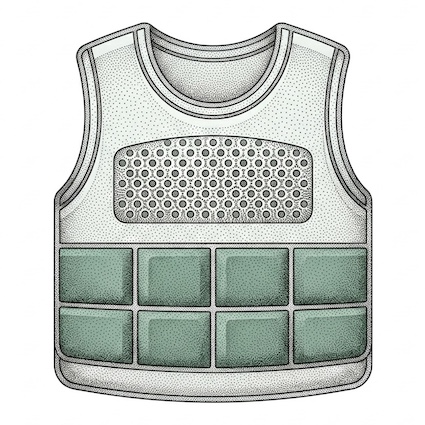
The highest-rated vest here, and the one that most clearly targets sensory processing. Where most weighted vests use removable pocket weights, the TOKANITY is filled throughout with glass beads locked into a 7-layer structure that distributes weight evenly across the chest, back, and shoulders. That even distribution matters: it means no lumpy pockets shifting around and no single heavy point pressing on one part of the body. The nylon outer is water-resistant and machine washable, the zip front is easier than velcro for older children to manage independently, and the polar fleece side panels keep the vest flexible so it doesn't restrict movement. It's also wearable under a school jumper without being obvious. The trade-off is that the weight isn't adjustable. You get what's in the vest. But for a child where the OT has already established the right weight range, that's rarely a problem.
Pros
- Highest rating on this list (4.9)
- Even bead distribution across chest and back
- No shifting or lumpy pockets
- Zip front: easier for older children to manage
- Slim profile sits flat under school jumper
- Machine washable
Cons
- Weight not adjustable (fixed bead filling)
- Most expensive option on this list
- Fewer size options than pocket-weight vests
Check Price on Amazon →
#2
The most established option here, and the one most likely to be familiar to OTs and SENCOs. The YAFANG uses removable pocket weights (six in total) so you can build up from light to heavier as your child acclimates, which is often how an occupational therapist will want to introduce weighted input anyway. Neoprene body with breathable mesh panels keeps it comfortable without overheating, which matters when children are moving around in it rather than sitting still. Fully adjustable velcro strap accommodates different torso sizes and leaves room to grow, and three sizes (S, M, L) cover most primary-school-aged children. The velcro means it's easy for adults to put on and adjust, though older children who want independence may find a zip easier. A solid, dependable choice if you want the flexibility of adjustable weight from day one, particularly if your child's sensory diet is still being worked out.
Pros
- 6 removable weights: adjustable from day one
- Neoprene + mesh: warm but breathable
- Familiar to OTs and school staff
- Adjustable velcro fits growing children
- Three sizes available
Cons
- Lower rating than the TOKANITY
- Velcro less discreet than a zip under clothing
- Pockets can shift if not seated correctly
Check Price on Amazon →
#3
For younger children who need persuading to wear a vest, the design matters as much as the function, and this one covers both. The ALNKDH has a dinosaur and star print that a lot of primary-aged children respond to much more positively than a plain black or grey vest. Beneath the fun exterior, the sensory mechanics are the same: six detachable weight pockets (four front at 0.33 lb each, two back at 0.66 lb each), neoprene body, and adjustable velcro straps across three sizes. The weight distribution puts more on the back than the front, which some OTs prefer as a starting approach. At around £28–£38, it's the most affordable proper weighted vest here, and the rating reflects that it works as advertised. Worth considering if you're introducing a compression vest for the first time with a younger child who needs the buy-in. A child who wants to wear it is more useful than a better vest sitting in a drawer. Pairs well with a sensory body sock for deeper pressure input during home wind-down time.
Pros
- Child-friendly design aids buy-in
- Most affordable weighted vest here
- Good rating (4.6) for the price
- Adjustable weight: 6 detachable pockets
- Front/back weight distribution
Cons
- Print less discreet under school clothing
- Smaller brand: less long-term review data
- Velcro closure rather than zip
Check Price on Amazon →
#4
The budget entry here, and the lightest option. The Tweens vest is primarily a compression vest rather than a weighted one: it delivers deep-pressure input through snug, stretchy polyester fabric rather than added weight. That makes it the right starting point for children who are new to sensory vests, or who may be hypersensitive and find removable weights too heavy. It's also the one best suited to all-day wear: no weights means no OT advice needed on 20-minute cycles, and the lightweight polyester is less noticeable under a uniform. Available in XS through L, fully adjustable straps, and the wider sizing range suits children whose torso doesn't map neatly onto S/M/L. Hand wash only is the main practical inconvenience. At under £28, it's a reasonable starting point, and if your child tolerates the compression well, you can move up to a weighted vest with confidence.
Pros
- Most affordable option here
- Lightweight: suitable for all-day wear
- Wider sizing (XS–L)
- Good entry point for new sensory vest users
- Very discreet under school uniform
Cons
- No weighted pockets (compression only)
- Hand wash only
- Less effective for strong sensory seekers
Check Price on Amazon →
What to look for
Four things that actually matter when choosing a compression vest for a neurodivergent child.
⚖️
Weight type: beads vs pockets
Bead-filled vests (like the TOKANITY) distribute weight evenly and don't shift. Removable pocket weights (YAFANG, ALNKDH) let you adjust as your child acclimates, which is often what an OT recommends when starting out. If you're working with a therapist on a proprioceptive sensory programme, ask which they prefer before you buy.
👕
School discreetness
If the vest will be worn at school, a plain colour and flat profile matters. The TOKANITY and Tweens sit flattest under a jumper. Velcro can catch on clothing and make noise; a zip closure is quieter and cleaner. If a vest is likely to draw attention, a child may refuse to wear it. A vest in a drawer helps nobody.
🌡️
Breathability
Neoprene holds warmth, which is helpful in winter but uncomfortable in summer or in a warm classroom. Vests with mesh panels (YAFANG) or lighter polyester (Tweens) give more temperature regulation. If your child is sensitive to overheating, a common sensory issue, factor this in. You don't want the vest to become a source of sensory overload in itself.
📋
Get OT input if you can
Compression vests aren't one-size-fits-all. An occupational therapist can advise on the right starting weight, the wearing schedule, and whether your child's sensory profile is more likely to benefit from weighted input or compression-only. If your child has a SEN support plan or an EHCP, a sensory vest can be written in as a specific provision. Ask the SENCO.
Questions parents ask
What does a weighted compression vest actually do?
A weighted compression vest delivers two types of sensory input at once: deep pressure from the snug fit, and proprioceptive input from the added weight. Together these signals help the nervous system regulate. For children who are sensory seekers, the vest provides the body-awareness input they are constantly looking for through crashing, jumping, or squeezing themselves into furniture. For anxious or hypersensitive children, even pressure can have a calming effect similar to a
weighted blanket worn as clothing. Occupational therapists use compression vests as part of sensory diets for both ADHD and autism.
How heavy should a compression vest be for my child?
The general OT guideline is that weighted items should total no more than 5–10% of the child's body weight. Most vests on this list come with removable weights totalling around 600–750g, which is appropriate for most primary-school-aged children. Start with fewer weights and add more only if your child tolerates them well. If your child has an occupational therapist, ask them to recommend the starting weight and wearing schedule — they can also advise on how long the vest should be worn before a break. A
sensory profile documenting your child's proprioceptive and tactile needs is useful to bring to that OT appointment, and to share with school if they're using the vest there.
How long should my child wear a compression vest?
OT guidance typically recommends 20-minute on, 20-minute off cycles rather than all-day wear. The nervous system adapts to sustained pressure, which means the regulating effect fades with continuous use. Timed sessions during high-demand periods — morning routine, homework, transitions between activities — tend to be more effective. The exception is compression-only vests without added weight (like the Tweens), which are generally considered safe for longer wear. Ask your child's OT or SENCO if you'd like a specific wearing schedule built into a sensory diet or support plan.
Can my child wear a compression vest at school?
Yes, with the right groundwork. A compression vest worn under a school jumper is invisible to classmates and causes no disruption. If it's been recommended by an OT, you can ask the SENCO to include it in your child's SEN support plan or EHCP provision. Schools are generally familiar with sensory vests, especially where an OT has been involved. Worth checking: vests with obvious velcro or protruding pockets are less discreet — the neoprene and bead-filled styles here are both classroom-friendly. The Tweens compression-only vest is probably the most discreet of the four.
What is the difference between a compression vest and a weighted vest?
A pure compression vest relies on snug, stretchy fabric to deliver deep-pressure input without added weight. A weighted vest adds removable weight pockets to give proprioceptive input on top of the compression. Most of the vests here are both: they combine a close fit with added weight. The combined approach is what most OTs recommend for sensory-seeking children, because it addresses both the pressure need and the body-awareness need at once. If your child is hypersensitive rather than hyposensitive, a compression-only vest like the Tweens may be a better starting point.