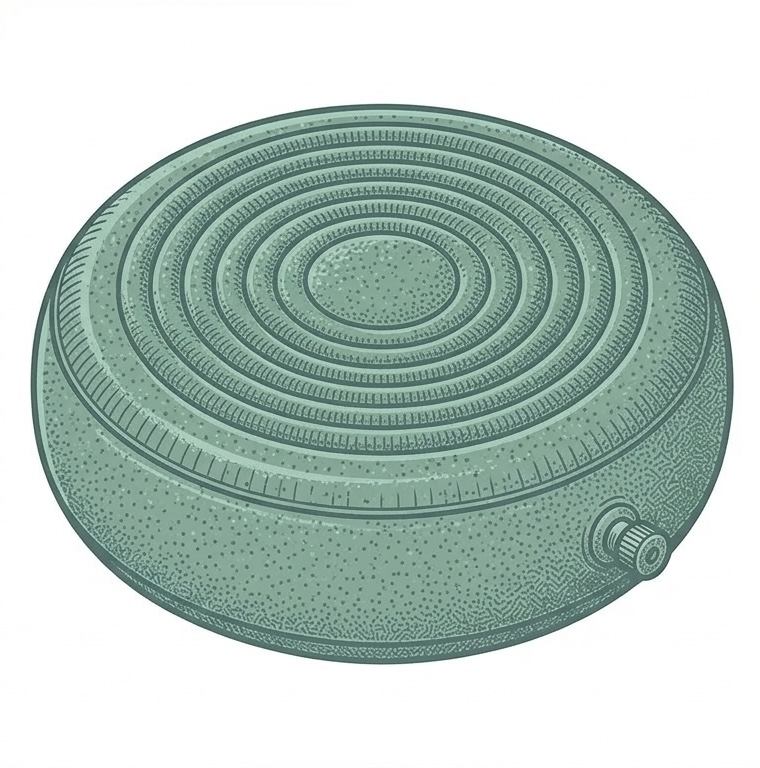
A good fidget is the difference between Jude getting through a forty-minute English lesson and Jude being asked to leave the room for the third time that week. We've tried, and broken, a lot of fidget toys over the years. The ones that survive aren't always the ones marketed hardest; they're the ones that are silent, pocket-sized, and satisfying enough to occupy the hands without occupying the brain. I'm a parent rather than an OT, but I've watched fidgets work for Jude when nothing else does, and I've also watched plenty of expensive ones get lost on day two. The picks below are the survivors. They're best understood as one part of a wider sensory diet, alongside other regulation tools like a wobble cushion at the desk or chair bands for legs that need to push, and they sit somewhere on the long list of tools families consider alongside or instead of ADHD medication.
Our top 5 picks, tested and reviewed for real sensory needs.
⭐ #1 Best Overall
The original Tangle Therapy has been a staple of OT practice for decades. Covered in soft, bumpy rubberised material, it provides satisfying tactile input as children twist, bend and reshape it continuously. It's completely silent, fits in a pocket, and can be manipulated one-handed, making it ideal for classroom use. The 20 interconnected curved pieces pivot 180° at each joint, offering endless fidgeting possibilities. Widely recommended by SENCOs and paediatric OTs for children with ADHD, autism and sensory processing differences.
Pros
- OT and SENCO recommended
- Completely silent
- Bumpy texture for tactile input
- Endless manipulation possibilities
Cons
- Can break with heavy use
- Higher price than budget alternatives
Check Price on Amazon →
#2 Best Value Multi-Pack
For families or schools wanting multiple fidget tangles at a lower per-unit price, this 7-pack of tangle-style fidgets offers excellent value. UK buyers consistently praise the quality for the price, durable enough for daily use, silent in the classroom, and the multiple colours mean each child can have their own. A great option for keeping spares at school, in the car, and at grandparents' houses.
Pros
- 7 for the price of 1–2 branded
- Good quality for the price
- Silent & classroom-safe
- Multiple colours
Cons
- Not the original Tangle brand
- Pieces can occasionally pop apart
Check Price on Amazon →
#3 Best Premium Fidget Cube
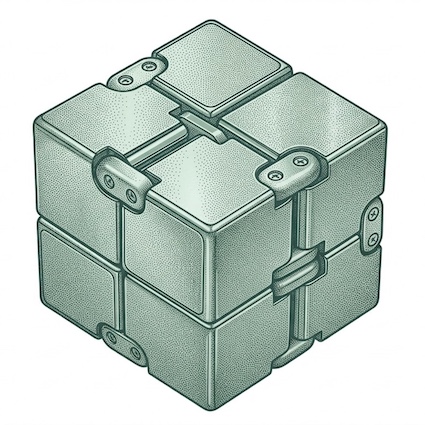
The PILPOC theFube is the premium infinity cube option, precision-machined from aluminium alloy with a satisfying weight and smooth, silent rotation. Eight small interconnected cubes can be folded and unfolded endlessly in one hand. Unlike cheaper plastic alternatives, the metal construction provides real tactile feedback and lasts far longer. Comes with a protective carry case making it easy to take to school. Particularly popular with older children and teenagers who want something that doesn't look obviously therapeutic.
Pros
- Premium aluminium build
- Satisfying weight & feel
- Silent
- Includes carry case
- Discreet for older children
Cons
- Higher price point
- Heavier than plastic options
- Ages 6+ only
Check Price on Amazon →
#4 Best for Classrooms
Wacky Tracks are a classroom staple: 24 snap-and-click plastic links that pivot and lock into endless shapes silently. Children can fidget with them continuously without making noise or disturbing others. The snap-and-click action provides satisfying proprioceptive feedback, and the chain can be shaped into letters, animals, and abstract forms. The 6-pack means there's always a spare, and the low price makes replacements painless.
Pros
- Pack of 6: great value
- Completely silent
- Snap-click action is satisfying
- BPA-free
- Good for fine motor skills
Cons
- Links can occasionally separate
- Smaller children may lose pieces
Check Price on Amazon →
#5 Best Sensory Rings
Spiky sensory rings are one of the most discreet fidget tools available. They sit on the finger and provide gentle acupressure as children roll them up and down. Ideal for children who chew sleeves, pick skin, or bite nails, as the rolling sensation meets a similar sensory need safely. For children whose primary need is oral input rather than tactile, a chew necklace is usually the better starting point. The 30-pack is exceptional value and means every classroom, bag, and bedroom can be stocked. Made from stainless steel with an anodized coating, available in 5 colours.
Pros
- Very discreet on the finger
- Excellent value: pack of 30
- 5 colours included
- Stainless steel: durable
- 2,800+ UK reviews
Cons
- Metal, not for under 3s
- Can spring open with heavy use
Check Price on Amazon →
Frequently asked questions
The questions parents ask us most.
Are fidget toys actually effective or just a trend?
The evidence base is growing. Studies suggest movement and tactile input can improve attention and reduce anxiety in children with ADHD and sensory processing differences. Many OTs incorporate fidget tools into sensory diets. The right fidget for the right child matters enormously, not every tool works for every child.
My child's school has banned fidget spinners. What can I use instead?
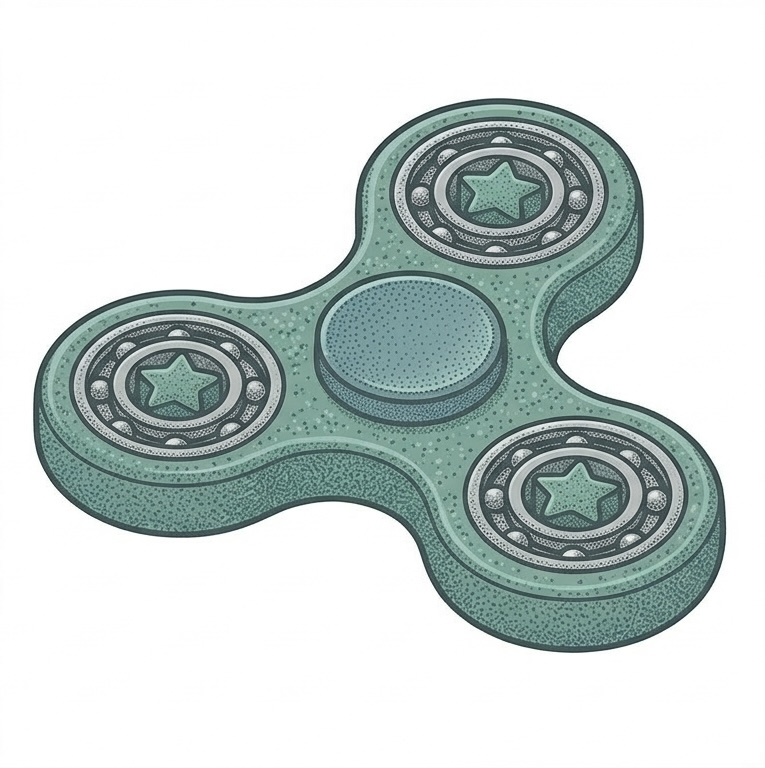
Fidget spinners were banned in many schools due to being distracting and noisy. Silent alternatives like Tangle fidgets, spiky rings, and Wacky Tracks are generally much better accepted. A letter from an OT supporting their use can help significantly. A
sensory profile detailing your child's need for proprioceptive input alongside that letter makes the case more concrete for a school that isn't already familiar with sensory-seeking behaviour.
At what age can children use fidget toys safely?
Most fidget toys are suitable from around age 3, but always check individual product recommendations. Small parts can be a choking hazard for very young children. For toddlers, larger silicone fidgets are safer than small cube-style toys.
Can fidget toys help with handwriting?
Yes. Using a fidget for a few minutes before a writing task can help regulate the sensory system and improve pencil grip and focus. Some OTs recommend specific hand fidgets designed to develop the same fine motor muscles used in writing.
How do I know if my child needs a fidget toy?
Signs that a fidget tool might help include: constantly touching objects or people, difficulty sitting still, chewing clothes or pencils, poor attention that improves during movement, or frequent hand-wringing. An OT assessment can give a formal recommendation.