Classroom Sensory Tools
Best Chair Bands for
Fidgety Feet at School
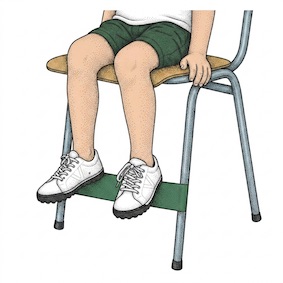
A simple elastic band that fits around chair legs. It gives restless children somewhere quiet to put all that movement without leaving their seat.
A simple elastic band that fits around chair legs. It gives restless children somewhere quiet to put all that movement without leaving their seat.
"Jude has always done something with his legs while he's sitting: chair rocking, floor tapping, bouncing his heel constantly. Chair bands don't stop that, but they redirect it somewhere useful. He pushes against the band instead of the floor, gets the proprioceptive input he needs, and the noise stops. His teacher noticed the difference before I even mentioned it."
— Sarah M., founder of Sensory Sorted
A chair band is the simplest and cheapest sensory tool we own: a £5 strip of latex that goes around the front legs of a chair. Children push their feet against it instead of tapping, kicking, or rocking. The mechanism is precisely the same one that makes a wobble cushion or a stress ball work: contained proprioceptive input gives the nervous system the regulating feedback it's hunting for, and the rest of the body settles. I'm a parent, not an OT, and even so Jude's English lessons changed the term we put a chair band on his school chair, and his teacher noticed before I'd told her anything. They sit naturally alongside other classroom-friendly tools like silent desk fidgets and fit comfortably into a wider sensory diet aimed at giving sensory-seeking children the input they need without requiring them to leave their seat.
Our top picks: tested for real sensory needs across different budgets and band types.
The KEEPZY set is the one I'd recommend first, particularly for parents who want something that will last. Made from natural latex rather than the TPE plastic used in cheaper alternatives, there's a firmer, springier bounce that gives children more satisfying resistance to push against. The pack of 12 means you'll have spares for school and home, and replacements ready when they eventually wear out. They fit chairs from 10 to 24 inches wide, which covers virtually every primary school chair I've encountered. Crucially, they're genuinely quiet, no slapping or snapping sounds when in use, which matters a lot in a classroom setting. KEEPZY market these specifically at children and ADHD use cases, so the sizing and resistance level is tuned for that age group rather than being repurposed exercise equipment.
Professor Fidget is a brand that exists specifically for sensory and ADHD tools, and this set reflects that focus. The pack includes three bands in different thicknesses (0.5mm, 0.7mm, and 0.9mm), colour-coded so you can identify them at a glance. The thinner bands are easier for younger or smaller children to push against; the thicker ones offer more resistance for older children or stronger sensory seekers. It's the most thoughtfully designed option in this roundup for parents who want to find the right level of input for their child rather than just picking one band and hoping. Age-rated for 3–10, and made from natural latex like the KEEPZY. At this price point, it's excellent value for a proper SEN-positioned product.
If you're outfitting a classroom or want a bulk supply at home, the WNSIRVY is the one to look at. It comes in packs of 5, 16, or 25, making it practical for teachers who want to equip multiple chairs, or parents who go through bands quickly. Made from TPE rather than latex, so it's the right choice if your child has a latex sensitivity. The bands are 62cm long, the longest in this roundup, which means they accommodate a wider range of chair sizes up to 30 inches wide. Multi-colour coding makes it easy to assign one per child or track which desk has which band. Resistance is softer than the latex options, which may suit children who find firmer bands uncomfortable.
The TRKETK set is the cheapest way in, and it does a decent job. Five bands in five colours, each a different thickness (0.35mm to 1.1mm), so like the Professor Fidget set you can experiment with resistance levels before committing. The TPE material is softer and lighter than latex, and the bands are quite thin, which makes them easier to install and remove, but means they don't last as long under heavy daily use. If you're not sure whether your child will take to chair bands at all, or if you just want something inexpensive to send into school without worrying about it getting lost, this is a sensible starting point. At this price, you're not losing much if it turns out not to suit your child.
The questions parents ask most about chair bands.