Visual Schedules
The best visual schedules for children who need to see the day before they can face it
Magnetic weekly boards, PECS-card timetables and three-step now-and-next strips that turn the unknown shape of the day into something a child can read at a glance.
✍️ Written by Sarah M.
🔗 Contains affiliate links
📅 Updated May 2026
⭐ Sarah's Top Pick
"The LIKARTO board lives on our kitchen wall, and it's changed our mornings. Ella checks it before she's even fully awake. Knowing that breakfast comes before getting dressed, and that swimming is on Wednesday not today, has cut her morning anxiety in half. The morning and evening routine sections are the bit I didn't know we needed, and now I wouldn't be without them."
— Sarah M., on the LIKARTO 2-in-1 Weekly & Daily Visual Timetable
There's a particular kind of morning meltdown that's really about not knowing what the day holds. Will it be school? Soft play? Grandma's house? When the answer lives only in your head, a neurodivergent child can't access it, and the not-knowing turns into anxiety, and the anxiety turns into refusal. I'm not an SLT, I'm a parent, but visual schedules are one of the most consistently useful tools we've used. Both of mine respond to them, in different ways. For Ella's morning anxiety, the schedule on the kitchen wall lets her check what's coming without having to ask. For Jude, it's about predictability across the week. And for my niece, who has a PDA profile, a now-and-next board does something a full schedule never could: it shows just enough information to feel safe, and not so much it feels like a list of demands. Pictures hold what words can't, and a child can return to a picture as many times as they need to. If you're new to all this, our companion guide on how to use a visual schedule walks through the three formats, how to introduce one without it backfiring, and what to do when it stops working.
Our top picks
Five visual schedules and now-and-next boards worth considering, ranked from the most versatile 2-in-1 to the simplest three-step routine board for younger or PDA children.
⭐ #1 Top Pick
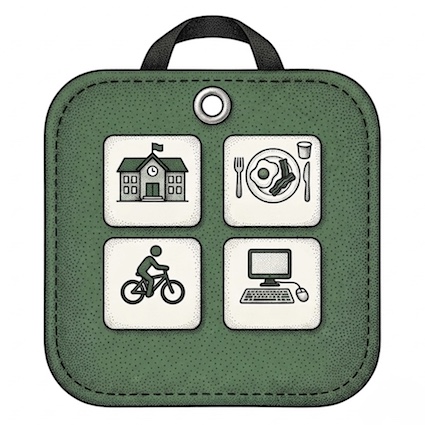
The most versatile board on this list. The LIKARTO is genuinely two boards in one: the main panel shows the full week ahead in a row of seven, and a separate strip beneath holds morning and evening routine magnets (brush teeth, get dressed, eat breakfast) that repeat daily. That combination is what makes it land for an SEN family. The weekly view does the work of reducing school-day anxiety by showing what's coming. The routine strip does the work of replacing nag-cycles with a self-checking sequence. With 185+ illustrated magnets covering everything from school subjects to medical appointments to "fun day with grandma," there's enough range to fit most family lives, and the blank magnets let you add what's missing. Build quality is solid: thick magnetic board, hanging cord and table-stand both included, magnet storage bag for the cards you're not using this week. Available in green or pink. The illustration style is clear and not overly babyish, which matters for a primary-school child who doesn't want a "baby chart." This is the board I'd buy if I was buying one for the first time.
Pros
- Weekly view + daily routine strip combined
- 185+ illustrated magnets included
- Blank magnets for custom activities
- Hangs on a wall or stands on a surface
- Illustrations work for primary-school age range
Cons
- Larger footprint than a fridge magnet board
- Some families will only want the weekly half
- Magnets are small: not for under-3s
Check Price on Amazon →
#2
Designed by a UK mum-and-teacher, and that shows in the details. The picture cards are larger and clearer than most competitors', the symbol style is closer to the PCS images used in UK schools and SLT services, and the materials are properly hard-wearing: wipe-clean, tear-proof, designed to survive a primary-school environment. Velcro hook-and-loop fastening means cards stay where they're placed even when the board moves, which is the practical difference between a board that lives on a kitchen wall and one that gets carried to a grandparent's house or a holiday cottage. Particularly good for younger children, pre-readers, and any child where the path to a diagnosis is still in motion (the strong picture-symbol design is what makes it carry the weight when language is harder, including in early stages of getting an autism assessment for a child who responds to visual support). Practical and durable rather than decorative. This isn't the prettiest board on the list, but it's the one most likely to still be in use in two years.
Pros
- Teacher-designed with classroom experience
- Symbols closer to school PCS standard
- Tear-proof, wipe-clean materials
- Velcro keeps cards in place when carried
- Strong fit for pre-readers and younger children
Cons
- Less decorative than magnetic alternatives
- Velcro can pick up lint over time
- Fewer cards than the LIKARTO
Check Price on Amazon →
#3
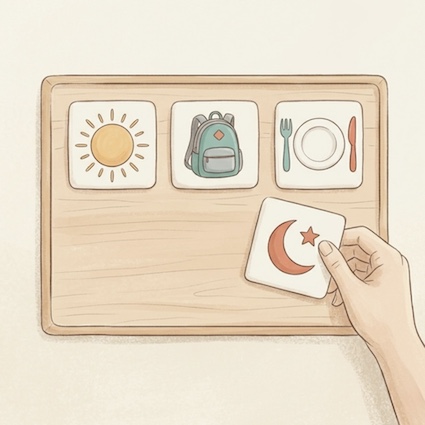
A different format, and an essential one for the right child. Where the boards above show the whole week or whole day, this one shows only three slots: now, next, later. That sounds like less, but for a particular kind of child it's exactly the point. Children who get overwhelmed by a full schedule, very young children just starting to use visuals, and many children with a PDA profile respond much better to three slots than to twenty-one. The cards use Picture Communication Symbols (PCS), the actual symbol set used by Boardmaker and most UK schools and SLTs, so they'll match what your child already sees in the classroom. Premium plastic construction, 4.5cm cards big enough for small hands, waterproof and crease-proof. The whole thing is small enough to live on a fridge or in a school bag. Ours travels: it goes to the dentist, on the train, to soft play. Sometimes the schedule we use isn't the kitchen-wall one, it's this. Sold by Autism Supplies and Developments, a UK SEN specialist.
Pros
- Three-slot format suits PDA, very young children, anxiety
- Genuine PCS symbols match school resources
- Compact: travels easily
- Waterproof, crease-proof premium plastic
- UK SEN specialist supplier
Cons
- Only 32 cards: smaller library than weekly boards
- Three-slot format won't suit children who want full overview
- Plain design: not particularly child-friendly visually
Check Price on Amazon →
#4
The budget entry into a full weekly schedule, and a properly competent one for the price. The Joyreal is foldable rather than rigid, with magnets along the top and bottom so it sticks to a fridge, classroom whiteboard or any other magnetic surface. 132 waterproof PECS-style picture cards covers most everyday activities (school, meals, bath, screen time, family events), and clear placement strips with transparent retaining tape keep cards in place without obscuring them. A yellow storage pouch holds the cards you're not using. The illustration style is bright and friendly without being overly babyish. If you're not sure your child will engage with a visual schedule and don't want to spend £25 finding out, this is the board to start with; the format is identical to the more expensive options, you just get fewer extras. Magnetic flexibility also means it folds away easily when family members come round, which some children prefer.
Pros
- Cheapest full-weekly board on this list
- Foldable and magnetic — sticks to a fridge
- 132 cards in the box
- Card storage pouch included
- Low risk: easy first purchase
Cons
- Foldable board flexes more than rigid alternatives
- No daily routine strip (weekly view only)
- Card style is fine but less PCS-aligned than the Create Visual Aids set
Check Price on Amazon →
#5
Lower rated, last on the list, and earning its place precisely because it doesn't look clinical. Some neurodivergent children take one look at a standard PECS-style board and refuse — particularly children who have already had a long path of professional input and now associate symbol cards with appointments. The Euclidean Cube planner has a cute animal theme, dry-erase capability alongside magnets, and looks more like a child's bedroom decoration than a behavioural tool. For families where a "proper" visual schedule has already been resisted, the warmer aesthetic can be the thing that gets it on the wall. 237 magnets across six categories, plus a dry-erase pen for things you want to write rather than place, plus a sturdy storage box. Hangs on a wall or stands on two display easels included. Useful as part of a wider routine and structure approach rather than as a clinical visual support. Lower 4.2 rating reflects that the magnets are smaller than the LIKARTO's and a few reviewers note the board feels lighter; it's a planner first and a SEN tool second, which is its strength and its limitation.
Pros
- Friendly animal aesthetic: less clinical-looking
- 237 magnets across six categories
- Dry-erase + magnetic combined
- Display easels and storage box included
- Suits children resistant to "SEN-looking" boards
Cons
- Lowest rating on this list (4.2)
- Magnets smaller than the LIKARTO's
- Animal styling not for every child or teen
Check Price on Amazon →
What to think about before you buy
Visual schedules are inexpensive but the format choice matters more than the price. Match the board to the child rather than the other way round.
📅
Full week vs daily vs now-and-next
Different children need different amounts of information. A full weekly board (LIKARTO, Joyreal) suits children who feel calmer when they can see the whole shape of the week. A daily routine strip works for children focused on the next few hours. A now-and-next board shows just three slots and is the right call for children who get overwhelmed by more, including many PDA children and very young children.
🎴
PCS vs custom illustrations
Picture Communication Symbols (PCS), sometimes called Boardmaker symbols, are the standard set used by UK schools and SLT services. Boards using genuine PCS (the Autism Supplies and Developments now-next board, the Create Visual Aids set) match what your child already sees in the classroom. Custom illustrated cards (LIKARTO, Joyreal, Euclidean Cube) are warmer and friendlier but a step removed from the school standard.
🧲
Magnetic vs Velcro vs plastic
Magnetic boards stick to a fridge or whiteboard and let you swap cards quickly. Velcro fastenings (Create Visual Aids) hold cards more firmly when the board is moved or tilted. Both work; the practical question is whether the board mostly lives on a wall (magnetic is fine) or moves between rooms (Velcro is better). For boards used in the car or carried to grandparents' houses, Velcro wins.
🏫
Use at school
Visual schedules are one of the most common reasonable adjustments in UK SEN classrooms — your child's school may already have a version on the wall. If your child has an EHCP or SEN support plan, having a matching schedule at home makes the transition between settings much smoother. Talk to the SENCO about which symbol set the school uses; matching that at home costs nothing and helps a lot.
🤝
Who builds the schedule each morning
For most children, the parent builds the day and the child checks it. For PDA children and many older neurodivergent children, that framing is the problem — the schedule becomes a list of demands rather than a tool. Letting the child move the cards themselves, build their own day, or choose the order where there's flexibility shifts the dynamic from compliance to collaboration. Worth trying both ways.
⏱️
Pair it with a timer
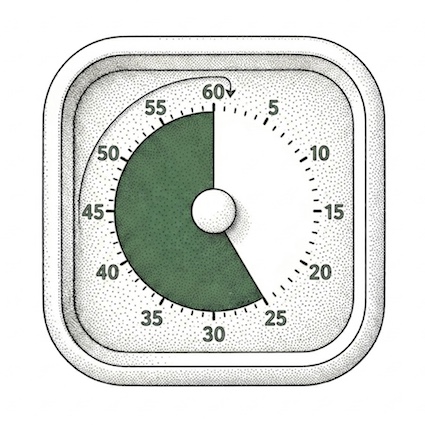
Visual schedules answer "what's happening?" but don't answer "for how long?" That second question is where a visual timer earns its place. The combination (schedule on the wall showing the shape of the day, timer on the desk showing how much of "now" is left) is more powerful than either alone, and is what most OTs and SENCOs end up recommending together rather than separately.
Frequently asked questions
The questions parents ask us most about visual schedules and now-and-next boards.
What is a visual schedule and why does it help children with autism or ADHD?
A visual schedule is a board or chart that shows what's happening today (or this morning, or this week) using pictures rather than just words. It might be a magnetic board with PECS-style picture cards laid out in order, or a simple now-and-next strip with three slots. For children with autism or ADHD, language alone can be hard to hold in mind, especially when they're already overloaded. A visual schedule offloads that working-memory work onto something the child can see and check whenever they need to. It reduces the anxiety of not knowing what's coming, smooths transitions, and gives the child a sense of control. Most UK schools and SLT services already use them, which means many neurodivergent children are already familiar with the format. Pairing a visual schedule with a
sensory profile and communication passport gives any new teacher or support staff a complete picture of how your child works — the schedule tells them the structure; the passport tells them the person.
Visual schedule vs now-and-next board: which does my child need?
Different tools for different situations. A full visual schedule (weekly board, daily routine chart) works for children who can hold a longer view of the day and benefit from seeing the whole shape of it. A now-and-next board, with only three slots (now, next, later) or sometimes just two, is for children who find a full schedule overwhelming. PDA children, very young children, and children in a state of high anxiety often do better with now-and-next. Some families use both: a weekly board on the kitchen wall for the bigger picture, and a small now-and-next board in the child's bedroom or school bag for moments of overwhelm. Start small if you're unsure. You can always add a fuller schedule later.
What age are visual schedules suitable for?
From around age two upwards, with the format chosen to suit the child. Toddlers and pre-schoolers do best with simple now-and-next boards using clear, recognisable picture cards. Primary-school children (5–11) often manage a full daily or weekly schedule, particularly if they're already used to one at school. Older children and teens may prefer something less obviously "for kids" — a magnetic board with neutral icons, or a simple printed weekly timetable on the fridge. The format matters less than the consistency. A schedule that gets used every day, even for two weeks, will help more than a more elaborate one that gets abandoned after a fortnight. Our
guide on how to use a visual schedule covers the two-week trial period in more detail, plus the common mistakes that make schedules fail in the first few days.
Are visual schedules useful for children with PDA?
They can be, but the format needs to be chosen carefully and the framing matters as much as the board itself. Traditional visual schedules (full week, every slot filled, child expected to follow it) can feel like a long list of demands to a PDA child, which is the opposite of what you want. Now-and-next boards usually land better: less information visible at once, more sense of "here's what's happening," less sense of "here's what you must do." Declarative framing helps too: "the board says lunch is next" lets the board carry the demand rather than you. Some PDA families find that letting the child move the cards themselves, or build their own schedule for the day, works better than a parent-set one. Our
PDA parenting guide goes into more detail.
Where can I find more PECS-style picture cards if my child needs ones not included?
Most of the boards reviewed here come with 130–250 picture cards covering common activities, but every child has gaps. The two main routes are: print-your-own (Twinkl has a large free PECS-style card library, as does the National Autistic Society resource section), or buy expansion packs separately on Amazon UK. Some families take photos of specific items the child cares about (a particular cup, a particular book, the actual route to school) and laminate those as bespoke cards. If your child is already using PECS at school or with an SLT, ask them which symbol set they're using (Boardmaker / PCS is the most common in UK schools) so cards stay consistent across home and school.