Related Guide
After-School Restraint Collapse
The technical term for the predictable post-school crash. What it is, why it happens to neurodivergent children, and what the recovery window actually needs to look like.
Why your child seems fine at school and falls apart the moment they walk through the front door. What masking costs them, how to spot it, and how to make home the place where the mask can come off.
I'm a parent, not a clinician. This article is based on my own experience with my two children and on publicly available research and guidance from the National Autistic Society, Autistica, and the wider UK SEN community. If your child is showing signs of significant distress, anxiety or burnout, please speak to your GP or your child's mental health team first.
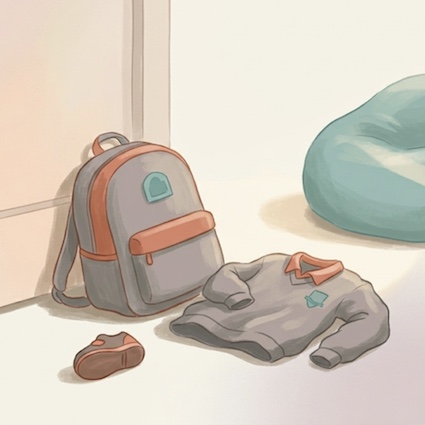
The school called me one afternoon to say Ella had had "a brilliant day." She'd put her hand up in English, made a friend at break, finished her lunch. I drove to pick her up feeling lighter than I had in weeks. Then she got in the car, and the second the door shut behind her she started screaming, the kind of scream that has been waiting six hours to come out. By the time we got home she was inconsolable on the kitchen floor. I sat next to her on the lino and thought: this is the cost of the brilliant day.
I didn't know the word for it then. I do now. The word is masking, and once you know to look for it, you can't unsee it.
Masking is when an autistic child consciously or unconsciously suppresses behaviours that come naturally to them, so they fit in with the people around them. The National Autistic Society describes it as a survival strategy. It works in the short term and costs a great deal in the long term.
In practice, masking looks like a lot of small, invisible jobs being done at once. Forcing eye contact that feels physically wrong. Holding back stimming because the children at school don't do it. Copying another child's facial expressions a beat behind their own. Rehearsing what to say before saying it. Laughing at jokes that aren't funny so the laughing fits the room. Not flinching when the bell goes, even though it hurts. Sitting through assembly with your nervous system flooding, and looking ordinary.
None of this is conscious deception. It's not a child being sneaky or manipulative. For most autistic children it's automatic, learned early, and protective. It's what they do because the alternative (being visibly different in an environment that punishes difference) feels less safe.
And it's exhausting. The thing parents and teachers most often miss about masking is just how much energy it takes. Sensory overload is heavy enough on its own. Doing all that managing while also performing a version of yourself that the world finds easier is heavier still. By the time a masked child gets home, they have nothing left.
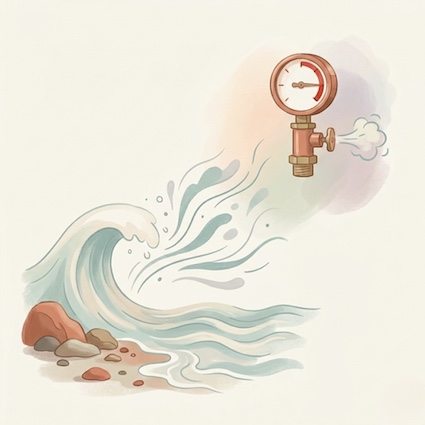
The shorthand many UK SEN parents and clinicians use for this is the Coke bottle effect. Your child is the bottle. The school day is the shake. Everything they suppress (the sensory load, the social effort, the held-back stims, the unsaid no) is the pressure building inside.
Then they get home and the lid comes off.
What you see, in the kitchen at 3:30pm, is everything they couldn't release earlier. The meltdown. The aggression. The sudden flatness that looks like disrespect. The way they push the dog. The way they slam the door on a sibling who hasn't done anything. None of it is about you and very little of it is about that specific moment. It's the pressure finding the only place safe enough to come out.
This is the same mechanism behind after-school restraint collapse: the technical term for the predictable post-school crash that follows a heavy masking day. The two ideas overlap almost entirely. Masking is the work; restraint collapse is what happens when the work stops.
For a long time I thought Ella was just being difficult after school. Then someone described the Coke bottle effect to me and the entire afternoon recategorised itself in my head. She wasn't being difficult. She was decompressing. The brilliant day at school and the meltdown in the kitchen weren't two different stories. They were the same story.
— Sarah M., founder of Sensory SortedMasking is, by design, hidden. Spotting it in your own child means watching for the small tells rather than the obvious ones. Some of these will sound familiar. Some won't show up in your child at all. The pattern matters more than any single sign.
Teachers describe a child you don't recognise. "A delight." "No concerns." "Always engaged." Meanwhile you've spent the term holding together a child who can't get to the school gate without crying.
The moment the school door shuts behind them, the wheels come off. Tears, shouting, going limp, refusing to walk. The transition from school to home is where the bottle uncaps.
Your child has one friend whose mannerisms, voice and phrases they have noticeably borrowed. Modelling on a quieter child is one of the classic masking strategies, particularly common in autistic girls.
Anxiety, stomach aches or sleep problems before school days, often clearing up over the weekend. The body knowing what's coming, even when the child can't put it into words.
A child who is bright, polite and chatty in public can switch flat or non-verbal the second the front door shuts. That switch is the persona being put down, not bad behaviour.
Hand flapping, rocking, repeating words. Things you see at home that you've never seen at school, because they've worked out those things aren't done in front of other children.
Many masking children find a bathroom is the only door they can shut at school. Frequent loo trips, especially clustered around hard moments (assembly, lunch, transitions), can be a regulation strategy.
A child who copes well through Monday, Tuesday, Wednesday, then falls apart by Thursday or Friday. The bottle holds for a few days. After that it's full.
Research suggests autistic girls mask more, on average, and start earlier. They're often better at social mimicry, more likely to model their behaviour on a quieter friend, and more likely to be missed in the classroom because they appear to cope. Boys mask too, and the pattern is not exclusive to girls. But the heavier prevalence in girls is the main reason girls are diagnosed later, sometimes by years.
This matters for parents trying to get a referral taken seriously. If your GP or your child's school says "but she seems fine at school," that is the masking evidence. A child who appears entirely typical in the classroom and falls apart at the school gate is a textbook masking presentation. A school report saying "no concerns" is not evidence that there are no concerns. It is evidence that your child is good at the job of looking like they have none. Both our autism assessment guide and the ADHD assessment guide walk through what to do when a referral is declined for this reason.
Masking isn't only an autism thing. Children with ADHD mask too, and the version often looks different. ADHD masking tends to involve suppressing impulse and movement: forcing stillness in lessons, holding in the urge to interrupt, pretending to follow a long instruction the first time, hiding the effort it takes to organise a school bag at the right moment.
Jude is the obvious example in our house. He's a sensory seeker with ADHD, and at school he's described as "settled" in a way that makes me wince. I know what it costs him to be settled. The held-still body is the work. The non-interruption is the work. By the time he gets home he is wired, irritable, and physically desperate to move. The afternoon trampoline session isn't optional; it's the release of everything he held still during English.
Children with both autism and ADHD (sometimes called AuDHD) often carry both kinds of masking load at once: suppressing the autistic differences and the ADHD differences in the same body, in the same environment, all day. The exhaustion at the end of that day is real, and the recovery time it requires is rarely understood by people who haven't seen it up close. Building a sensory diet that includes serious decompression after school is one of the most useful things a family can do for a child carrying this load.
Sustained masking is associated with increased anxiety, depression, autistic burnout and a higher risk of mental health problems in adolescence and adulthood. UK research from Autistica and others has highlighted the link between heavy masking in childhood and poor mental health outcomes later. The pattern is well enough recognised now that "autistic burnout" is a recognised concept in the SEN community, even if it's not yet a formal diagnosis.
This doesn't mean every moment of masking is damaging. Some social adjustment is normal; neurotypical children do it too. The risk is masking that is sustained, exhausting, and never has a safe place to come off. A child who masks through every hour of every day, in every relationship, with no environment where the mask is allowed to drop, is the child most at risk.
The clearer signs that masking is tipping into burnout are worth knowing. Increasing meltdowns or shutdowns at home. Loss of skills the child previously had (reading, talking, dressing themselves, going out). Sleep collapsing in the way sleep often does in neurodivergent children when overload is high. Withdrawal from things they used to love. Increasing school anxiety or refusal. None of these mean burnout in isolation, but a pile of them at once is a signal worth taking seriously.
You can't tell a child to stop masking. Masking is automatic and protective; instructing a child to drop it is asking them to override years of patterning in environments where the patterning is keeping them safe. What you can do is build a home where masking isn't required. The mask comes off on its own when the room is safe enough.
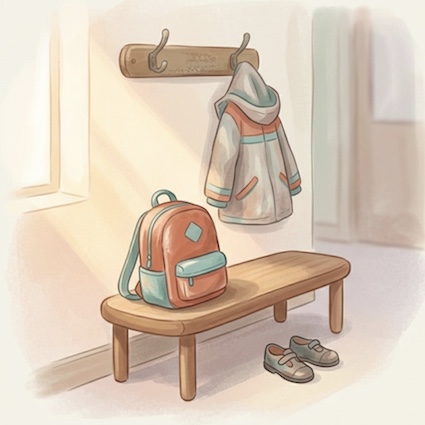
The first thirty to sixty minutes after school is the most important window of the day for a masking child. Resist the urge to ask how school was. Resist the urge to fill the silence. Resist the urge to schedule activities. A drink, a snack, a low-stimulation room, no questions. This is not indulgence; it's recovery time as basic as letting a runner cool down. Some children need longer than an hour; some are ready to talk after twenty minutes. Watch your child, not the clock.
If your child rocks, flaps, hums, repeats a phrase a hundred times, paces, or twirls a piece of fabric, those are all regulation tools. They are not behaviours to redirect. The single most useful message you can send a masking child is that the body they have at school can be the body they have at home, and you don't mind which one. A house where stimming is accepted is a house where the mask can come off.
Many masking children are talked out by 3:30pm. The school day has demanded constant verbal performance, and they need silence to recover. Honour the silence. Don't force conversation about the day, don't make eye contact a test, don't insist on "good manners" as the price of being in the kitchen. Some children will start talking on their own, hours later, sideways, while doing something else. That's where the real conversation happens.
Most masking children come home with a nervous system that's been running hot all day and needs a way to discharge. Weighted blankets, sensory tents, ear defenders for the loud time of day, a trampoline in the garden, a tub of therapy putty in front of a screen. Different children need different things, and most children need more than one. The general principle is: a masking child has spent the day in a body that wasn't allowed to do what it wanted. Home is where the body gets to.
Older children especially benefit from hearing this in plain words, ideally repeatedly. Something like: "You don't have to be the school version of you when you're with me. I love the home version. The home version is the actual you." It can feel awkward to say. Say it anyway. Many masking children carry the worry that if they let the mask slip, even at home, they'll be loved less. The explicit reassurance matters more than you'd think.
Schools that take masking seriously are gold. Schools that dismiss it because the child is "no trouble in class" are common. The most useful framing I've found, in meetings with the SENCO and the class teacher, is concrete:
"My child appears to cope at school. The moment they get home they go into meltdown. That difference is the masking load showing up. What I'm seeing in the evening is what they're spending the day suppressing. I'm not asking the school to manage the evening; I'm asking the school to recognise that the day-time picture is incomplete."
Schools that hear this start looking for the early signs in the building: increased toilet visits, withdrawal at break, quietness rather than disruption, the friend whose voice your child has started borrowing. Adjustments that help include access to a quiet space at break, permission to leave class without asking when overwhelmed, sensory tools allowed at the desk, and a key adult the child can go to. If you have an EHCP or are in the process of getting one, masking-specific provision can be written into it. The EHCP guide covers how to get specific support written in rather than left as good intentions.
Children with a PDA profile of autism often mask in a particular way: by reading the room and matching it socially, sometimes in highly skilled ways, while underneath the social performance the demand-avoidance system is running flat out. PDA children can present as articulate, sociable, even charming at school, and crash hard at home. The masking load and the demand load combine into something close to constant high alert, all day.
For PDA children especially, home as an unmasking space matters more, not less. Low demands, declarative language, lots of agency, no surprise instructions. The PDA parenting guide walks through the wider low-demand approach, and most of what works for PDA at home also reduces masking load for autistic and ADHD children who don't have a PDA profile. The two approaches overlap a lot more than they differ.
I'll add this part because the parents who read this are often, themselves, late-diagnosed or undiagnosed neurodivergent adults who have been masking their entire lives without knowing what to call it.
I was diagnosed with ADHD as an adult, after Jude's assessment. Reading about ADHD in children, I kept recognising myself: the effortful conversations, the rehearsed phone calls, the way I could pass at work and then collapse at home, the fact that my own version of "fine at school, falls apart in the car" had been going on since I was eight. I'd put it down to being a bit chaotic. It wasn't. It was a lifetime of low-level masking that I'd never had a word for.
If you read this and recognise your child, and then recognise yourself, you're not alone. Many of us find our children's diagnoses by recognising ourselves in the symptom lists. The unmasking work that helps your child also helps you. A house that lets the mask come off lets it come off for everyone in it.
Masking is not a disorder, a phase, or a behaviour to fix. It is a child doing extraordinarily hard cognitive and emotional work, all day, to fit a world that wasn't built for them. The work is invisible by design. The cost is real, even when no one at school can see it.
The most useful thing you can do as a parent is two-fold. First, recognise the work for what it is, so the meltdown at home stops looking like a behaviour problem and starts looking like the receipt for the day. Second, build a home where the mask is allowed to come off. Both of these are the long game. Neither is dramatic. Together they protect against the burnout that is the real cost of masking unrecognised over years.
If your child is melting down every afternoon and being praised at school in the same week, you are not failing. You are seeing both halves of a picture that most people only see one half of. The brilliant day and the kitchen-floor scream are the same story. You're the only person who gets to read it from both ends.
The things parents ask most often when they first recognise the pattern.