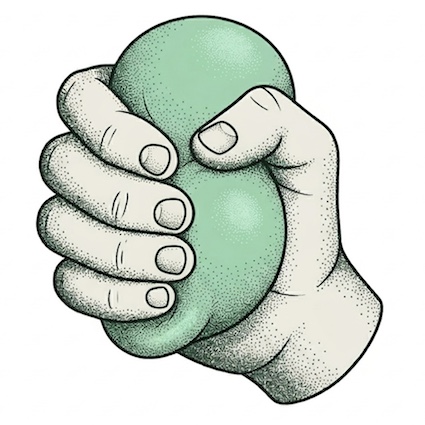
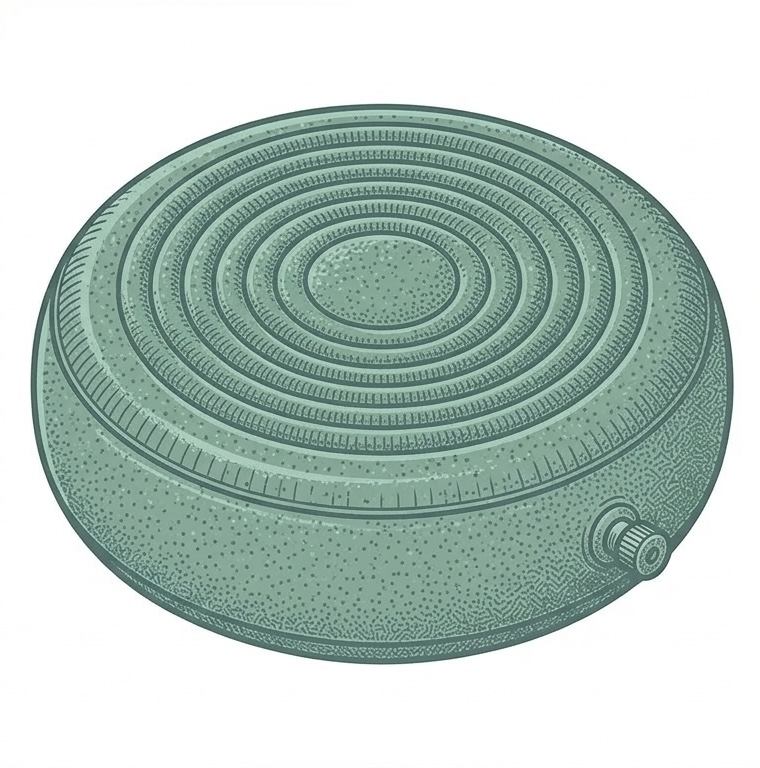
Therapy putty is one of those tools that looks underwhelming and turns out to be quietly transformative. If you're weighing it up against other classroom focus tools, my guide to fidget tools for school compares therapy putty, wobble cushions, chair bands, and fidget toys side by side. The science is straightforward: squeezing resistant material gives the hands and arms steady proprioceptive input, which calms a busy nervous system in much the same way a weighted blanket does for the whole body, just contained in something that fits in your hand. Jude's OT introduced putty as part of his sensory diet about two years ago, and it lives on the homework table now. I'm a parent rather than a paediatric OT. But for children who fidget, chew, or pick at their hands during sustained mental work, putty is one of the most parent-friendly purchases on this whole site: cheap, silent, classroom-acceptable, and difficult to lose.
My top 5 picks, from clinical-grade therapy putty to novelty sensory options.
#1 Best Overall
The JFA Medical set is the closest thing on Amazon UK to what you'd find in an OT clinic. You get five 57g tubs. Extra Soft, Soft, Medium, Firm, and Extra Firm, each colour-coded for easy identification. The resistance genuinely varies meaningfully between levels, which matters if you're using it therapeutically rather than just as a fidget. Customers with children who have dyspraxia and hypermobility report it working well for both hand strengthening and tactile regulation. It's also noted for leaving no residue on fabric, useful for a child who might absentmindedly wipe their hands on school uniform. Reusable and designed for individual use. At this rating with this product range, it's the clear first choice for families who've been told by an OT to try therapy putty.
Pros
- Highest rating in this category
- True medical-grade resistance levels
- Five tubs covers every need
- No fabric residue
- Well-suited to OT-directed use
Cons
- Not particularly exciting for younger children
- 57g per tub is modest: may need two sets for multiple children
Check Price on Amazon →
#2
The EPHRATA set covers five resistance levels in colour-coded tubs — the same format as JFA Medical but at a competitive price. Non-toxic, unscented, and built for regular use: squeezing, stretching, and moulding for hand strength and proprioceptive input. The unscented formula is a genuine advantage for children with smell sensitivities. Each 57g tub is portable and easy to carry in a school bag or therapy kit. Durable enough for daily use without losing resistance.
Pros
- 5 graded resistance levels
- Unscented: good for smell-sensitive children
- Non-toxic, portable 57g tubs
- Competitive price
Cons
- Less established brand than JFA Medical
- 57g tubs are modest in size
Check Price on Amazon →
#3
Where the JFA and EPHRATA options are clinical, this one is fun, and for many children, that matters. The JOYIN Galaxy putty changes colour when exposed to light, shifting between hues as your child handles it. At 120g it's also a significantly larger quantity than the therapy putty tubs. The trade-off is that it's a single pot of a single consistency rather than graded resistance levels, so it's better suited as a sensory fidget than a hand-strengthening tool. Highly elastic and formulated not to dry out. The visual element makes it particularly appealing for younger children and those who respond well to novelty and visual stimulation. Not suitable for children under 36 months.
Pros
- Colour-changing visual appeal
- Larger quantity: 120g
- Highly elastic and satisfying to stretch
- Good for sensory seekers who need novelty
- Dual use: fidget and sensory play
Cons
- Single resistance, not graded for therapy
- Higher price per gram than therapy putty sets
- Not suitable under 36 months
Check Price on Amazon →
#4
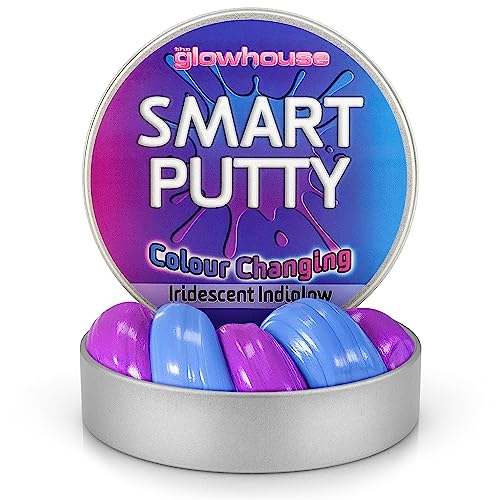
The Glowhouse putty takes a different novelty angle — it's heat-reactive rather than light-reactive, shifting from purple to blue as your child's hands warm it up. This makes the colour change more interactive and directly tied to handling the putty, which some children find particularly engaging. It's soft, stretchy, and malleable, and comes in a convenient tin that keeps it fresh between uses. The Glowhouse brand has a solid reputation for sensory products on Amazon UK. At the lower end of the price range for novelty putty, it's an accessible option for children who love the idea of a colour change but where budget is a consideration. As with the JOYIN option, this is sensory play territory rather than clinical therapy putty.
Pros
- Heat-reactive, colour change tied to handling
- Affordable entry to novelty putty
- Good tin storage keeps putty fresh
- Trusted UK sensory brand
Cons
- Single pot, single consistency
- Not graded for therapeutic resistance
- Smaller quantity than JOYIN
Check Price on Amazon →
#5
This one is the outlier on the list: it's slime rather than putty, which means no resistance and no therapeutic hand-strengthening use. What it does offer is rich tactile variety: three distinct textures in one kit (cloud slime, clear slime with foam balls that make a satisfying crackle, and butter slime), plus charms and add-ins for creative play. For children who are tactile seekers and love the sensory experience of different surfaces and textures, this delivers something the putty options can't: novelty, variety, and the pleasure of making and modifying something. The non-sticky formula is a genuine advantage over many slime products. Supervision is required for children under 3; not suitable under 3 years.
Pros
- Three distinct textures in one kit
- Auditory element: foam ball slime crackles
- Creative and open-ended play
- Non-sticky formula
- Great quantity: 360ml total
Cons
- Not therapy putty, no resistance or hand-strengthening benefit
- More mess potential than putty
- Not for children under 3 years
Check Price on Amazon →
Frequently asked questions
Common questions about therapy putty, answered.
What is therapy putty used for in children?
Therapy putty is used to strengthen hand and finger muscles, improve fine motor skills, and provide calming proprioceptive input through the hands. Occupational therapists commonly recommend it for children with dyspraxia, low muscle tone, hypermobility, autism, and
ADHD. It's also widely used as a quiet desk fidget: something for the hands to do that doesn't distract others.
What's the difference between therapy putty and ordinary Play-Doh or slime?
Therapy putty is specifically formulated to provide resistance, the key ingredient that makes it useful for hand strengthening and proprioceptive input. It comes in graded resistance levels (extra soft through to extra firm) so you can match the putty to your child's strength and needs. Play-Doh dries out and doesn't offer consistent resistance; most slime has no resistance at all. Colour-changing and novelty putties sit somewhere in between, and they're closer to sensory putty for tactile play than clinical therapy putty.
What resistance level should I choose for my child?
Extra soft or soft is the right starting point for most children, younger children, and those with low muscle tone or hypermobility. Medium suits older children with average hand strength. Firm and extra firm are typically used by teenagers and adults building hand strength. If your child has an OT, ask their advice. Resistance level matters for therapeutic use. For sensory fidgeting rather than hand strengthening, softer putty is generally more calming.
Can therapy putty be used in school?
Yes — putty is one of the quieter, lower-profile
desk fidgets available. It doesn't make noise, doesn't roll off desks, and can be used discreetly. Many SENCOs are happy for children to use it, particularly if it's been recommended by an OT. A note from an OT explaining the purpose can help if there's any pushback.
Is therapy putty safe for children?
All products on this list are labelled non-toxic. Most are suitable from age 3 or 36 months with adult supervision. The key safety consideration is that putty should not be eaten. Check age guidance on each product and supervise young children. The LAWOHO slime kit is not suitable for children under 3 years, and the JOYIN putty specifies 36 months and over.
How do I stop therapy putty drying out?
Always store putty in its sealed tub or container after use. Good-quality therapy putty (such as the JFA Medical and EPHRATA options) is designed not to dry out with normal use. Avoid leaving it exposed to air for extended periods. If your child tends to leave it out, a lidded container they can access independently is worth investing in.