Related guide
Getting an ADHD Assessment
Referral routes in England, how Right to Choose works and how to request it, and what the assessment itself involves.
Two conditions that were officially not allowed to co-exist until 2013, that regularly hide each other, and that pull a child in opposite directions at the same time.
I'm a parent, not a clinician. This is a plain-English summary of research on the autism and ADHD overlap. Nothing here is medical advice, and decisions about medication belong with your child's prescriber. Assessment routes and waiting-time figures apply to England.
AuDHD is the shorthand people use when someone is both autistic and has ADHD. It isn't a diagnosis, and you won't find it in any clinical manual. It came out of the autistic and ADHD communities online, because people living with both needed a word for something the diagnostic system had spent thirty years insisting couldn't exist.
That's not an exaggeration. Until 2013, the diagnostic manual used across most of the world explicitly barred clinicians from diagnosing both. If a child had an autism diagnosis, their attention and impulsivity were recorded as part of the autism. The rule changed with the fifth edition of the DSM. Thirteen years on, a lot of UK services still work as though it hadn't.
This guide covers how common the combination is, why the two conditions hide each other, what the internal conflict looks like day to day, and how to approach assessment and support in the UK when your child seems to sit in both camps at once.
DSM-IV, published in 1994, treated autism and ADHD as mutually exclusive. The stated logic was that inattention and hyperactivity in an autistic person were features of the autism rather than a separate condition. Clinicians were required to choose, and in practice they usually chose autism, because it was regarded as the more fundamental explanation.
DSM-5 removed the exclusion in 2013. Research on the overlap effectively began at that point, which is why the evidence base feels thin compared with either condition on its own, and why so many adults are being identified with the second condition decades after the first.
If your child was diagnosed before roughly 2015, or was assessed by a service still working to older habits, the absence of a second diagnosis tells you very little. It may mean the second condition isn't there. It may mean nobody was allowed to look for it, or thought to.
Estimates vary enormously, which is what happens when a research field is barely a decade old and the studies use different measures on different populations. Prevalence of ADHD symptoms in autistic children and adolescents has been reported anywhere from 2.6% to 95.5% across studies, which tells you more about the methods than the children.
The most useful single figure comes from a 2021 meta-analysis by Rong and colleagues, which pooled the available data and found ADHD prevalence among autistic people of 38.5% for a current diagnosis and 40.2% across a lifetime. Vanderbilt's research centre cites a range of 50% to 70% for autistic people showing ADHD presentation. The direction of travel from the other side is similar: a 2025 study of adults with ADHD found around 45% showing significant autistic traits, against an insurance-claims analysis showing only 1.7% carrying a formal autism diagnosis.
What the numbers mean in practice: somewhere between a third and two thirds of autistic children also meet criteria for ADHD, and the recorded rate of dual diagnosis is far below any of those estimates. If your child has one diagnosis and the picture still doesn't fit, that's a common position rather than an unusual one.
The clinical term is diagnostic overshadowing: once a child has one explanation attached to them, new symptoms get filed under it. An autistic child who can't sit still is described as dysregulated. An ADHD child who won't deviate from a routine is described as oppositional. In both cases the second condition is right there and gets absorbed into the first.
The other reason is that the traits genuinely pull against each other, and a child in whom both are present can end up looking mild in both. Someone whose autistic need for routine partially restrains their ADHD impulsivity may not look impulsive enough to trigger an ADHD referral. Someone whose ADHD novelty seeking drags them out of their autistic comfort zone may look more socially flexible than they are. Both conditions get scored down.
This is the part that most parents recognise instantly. Autism and ADHD both affect the same systems, and often push in opposite directions.
A craving for predictability alongside a brain that finds repetition unbearable. Elaborate routines get built and then abandoned. Both halves are real.
Constant hunger for new interests and new input, paired with genuine distress when things change unexpectedly. Change is fine if it was his idea and catastrophic if it wasn't.
Crashing into furniture and needing loud music, while being unable to tolerate a label in a shirt. This mix confuses assessments constantly.
Hours of total absorption in one thing sitting alongside an inability to begin an ordinary task. Hyperfocus and paralysis in the same child on the same afternoon.
ADHD sociability with autistic social processing costs. Often the child who talks to everyone at the party and cannot function for two days afterwards.
Real distress at mess combined with executive function that can't produce tidiness. This one causes a lot of unnecessary blame.
The practical result is inconsistency that looks like choice. A child manages something brilliantly on Tuesday and cannot do it at all on Thursday, and the reasonable adult conclusion is that Thursday was a decision. It usually wasn't. It was a different balance between two systems that don't agree with each other.
I have one autistic child and one with ADHD, and they went through two completely separate pathways, two separate waits, two sets of paperwork that asked overlapping questions and never once talked to each other. I got a very close look at how little the two systems communicate, and I know how many families are stuck between them with a child who needs both doors open.
Deep distress if the schedule changes, and no ability to execute the schedule without step-by-step prompting. The plan matters enormously and does not happen.
Autistic depth of interest running on an ADHD timescale. Everything about dinosaurs for eleven days, then nothing about dinosaurs ever again. The intensity while it lasts is total.
Autistic overwhelm plus ADHD emotional intensity, arriving with almost no warning and passing faster than a typical autistic meltdown. Meltdowns and shutdowns covers what's happening underneath.
Both conditions independently disrupt sleep, and together they compound. Sleep problems in neurodivergent children goes into what actually helps.
Often described in ADHD communities as rejection sensitivity. It sits on top of autistic difficulty reading whether rejection has happened at all, which makes it worse rather than better.
Bright, capable, doesn't apply himself, needs constant reminders, works beautifully one-to-one. Six teachers describing six different children is a useful signal in itself.
Autism and ADHD are assessed on separate pathways in most areas, usually by different teams, sometimes in different organisations, with separate waiting lists. There's no combined neurodevelopmental assessment as standard, though some areas are moving towards one.
Practically, this means you may need to request both, and you may need to request the second one after the first has concluded. My guides to getting an autism assessment and getting an ADHD assessment cover the referral routes for each, including Right to Choose for ADHD in England, which can substantially shorten the wait.
Put it in writing at referral rather than raising it at the appointment. Say you want both autism and ADHD considered, and ask for it to be recorded if only one is being assessed.
The instinct is to give a clean, consistent account. The inconsistency is the diagnostic information. Write down the Tuesday version and the Thursday version and hand over both.
A diagnosis of one does not rule out the other, and hasn't since 2013. If a clinician suggests otherwise, that's worth challenging politely and in writing.
Support at school is based on need, not diagnosis. SEN Support and EHCPs covers what can be requested while you're still on a list.

Referral routes in England, how Right to Choose works and how to request it, and what the assessment itself involves.
Girls and young women are disproportionately affected by all of this, because both conditions are already under-identified in girls and the combination compounds it. If that's relevant to your family, my guide to signs of autism in girls covers the pattern in more detail.
ADHD medication remains an option when a child is also autistic, and NICE guidance doesn't exclude it. What the evidence suggests is that the picture is less clear-cut than in ADHD alone.
The largest stimulant trial in autistic children, run by the RUPP Autism Network in 2005, found methylphenidate outperformed placebo on hyperactivity, but only 49% of participants were rated as clinical responders, against response rates commonly cited between 70% and 80% in ADHD without autism. Around 18% withdrew because of side effects, most often irritability. Later reviews have consistently reported that adverse effects, particularly appetite loss, sleep disruption and irritability, are more common in autistic children than in children with ADHD alone.
None of that is a reason to rule medication out. It's a reason to expect a slower, more cautious titration and to keep detailed notes on effects, and it's worth saying to a prescriber at the outset that your child is autistic. ADHD medication explained covers the classes of medication used in the UK and what monitoring involves.
The unifying principle is that you're supporting two sets of needs at once, and a strategy aimed at one can undermine the other. Rigid visual timetables can help the autistic side and be abandoned within days by the ADHD side. Free-flowing flexibility can suit the ADHD side and leave the autistic side in permanent low-grade panic.
Keep the shape of the day fixed and let what happens inside each slot vary. This gives the autistic side its predictability and the ADHD side its novelty, which is about the only arrangement that satisfies both.
Written and visual reminders rather than relying on recall. Visual schedules work here, provided they're short enough not to become another abandoned system.
Both conditions respond well to regular physical input. Building a sensory diet covers how to schedule it rather than reaching for it mid-crisis.
Time blindness and transition difficulty stack. A visual timer deals with both at once better than any verbal warning does.
Things that work stop working, and this is a feature rather than a failure on anyone's part. Rotate rather than concluding nothing works.
Sensory support usually needs to cover both seeking and avoiding at the same time, which is where a written profile earns its keep. My Sensory Profile and Communication Passport has space for both columns, so a teacher can see that the same child needs ear defenders in assembly and a trampoline at lunchtime.
Children carrying both conditions are managing a heavier load than either alone, and are often masking to do it. That's a recognised route into autistic burnout, which involves exhaustion, loss of skills the child previously had, and a sharply reduced tolerance for demands and sensory input.
The signs are worth knowing before you need them, because burnout is frequently misread as regression, defiance or a mental health crisis, and the response to each of those is different. Reducing demands early is far easier than recovering from a collapse. Autistic masking covers the mechanism that gets a child there.
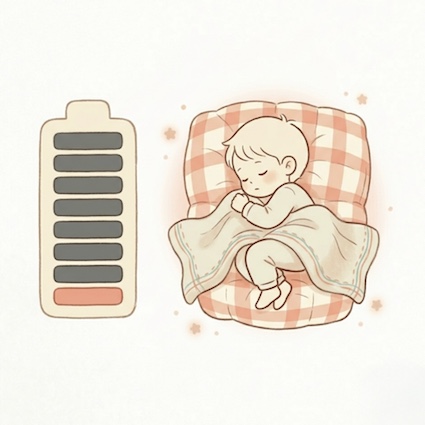
What burnout is, how it differs from depression, why skill loss is the distinguishing feature, and what recovery actually requires.
UK information and a helpline. Its material on co-occurring conditions is a reasonable starting point when a service is treating one diagnosis as the whole explanation.
UK organisations covering assessment routes, Right to Choose, and school support. Both increasingly cover the autism overlap.
Free, impartial advice on school support in every local authority area, and available before any diagnosis is confirmed.
Legally based advice if you reach the point of requesting an EHC needs assessment, with model letters and guidance on refusals.
If you're heading towards an EHCP, the assessment paperwork is where the two conditions most often get flattened into one. My EHCP Preparation Pack includes a parent views template and worked examples of specific provision wording, which matters when the plan needs to cover two overlapping sets of needs rather than one.
AuDHD isn't a diagnosis and probably never will be. What it does is give families and clinicians a way of naming something that the paperwork still handles badly: a child whose difficulties don't average out into a milder version of either condition, but compound into something harder.
If you've been told your child is a bit autistic and a bit ADHD and neither quite fits, that impression is usually accurate. The fit is poor because the systems describing it were built to pick one.
What parents ask most often about the autism and ADHD overlap.