Product Review
Best Mini Trampolines for Children
Reviewed and ranked for indoor bouncing. One of the most effective heavy work tools going, and most kids just think it's fun.
Two of your child's most important senses don't get a look-in at school. Here's what they are, what happens when they're out of sync, and what actually helps.
I'm a parent, not a professional. This guide draws on my own experience raising Ella and Jude, and on information from published occupational therapy sources, peer-reviewed research (including PMC/NIH), the Autism Research Institute, and paediatric OT clinics. It is not clinical advice. If you're concerned about your child's sensory processing, please speak to your GP or SENCO about a referral to a paediatric occupational therapist.
When Jude was five, his school called me in to talk about "some behaviours they were noticing." He was crashing into other children. He couldn't stay in his seat. He picked up toys and then squeezed them so hard they broke. He was always, always moving: climbing, bouncing, throwing himself onto the carpet during story time.
I already knew he was a sensory seeker. What I didn't properly understand yet was which senses he was seeking. It wasn't just about needing more stimulation generally. It was about two specific sensory systems: proprioception and the vestibular sense, that weren't getting enough input to feel regulated. Once his OT explained it to me like that, so much of his behaviour suddenly made sense. And once you understand which senses are driving things for your child, my Sensory Profile and Communication Passport is a practical way to document it — covering seven sensory areas and what helps in each one.
These two senses are the ones that never get mentioned in school. You know about sight, hearing, smell, taste, and touch. But proprioception and the vestibular sense are just as fundamental — and so is interoception, the eighth sense that tells your child what is happening inside their body. For many neurodivergent children, these are the senses that cause the most daily difficulty.
Your body's internal positioning system. Receptors in the muscles, joints, and tendons constantly feed information to the brain about where each body part is, how it's moving, and how much force is being used, all without you having to look. It's how you can type without watching your fingers, or pour a drink without thinking about grip strength.
Your body's balance and movement detector. Located in the inner ear, it tracks the position and movement of the head in relation to gravity (telling the brain whether you're moving or still, which direction, and how fast). It underpins balance, coordination, and spatial awareness, and it's the first sensory system to develop in the womb.
These two systems work together constantly. When you walk upstairs without looking at your feet, that's proprioception telling you where your legs are. When you stop yourself from toppling sideways, that's your vestibular system making micro-adjustments. They're also deeply connected to the other senses, the vestibular system in particular works alongside vision and hearing to help the brain make sense of the world. A third hidden sense, interoception (the sense of what's happening inside the body), sits in the same family and is covered in my guide to emotional regulation and the Zones of Regulation.
Sensory integration, the process of combining information from all the senses into a coherent picture relies heavily on proprioception and vestibular input as its foundation. The Autism Research Institute describes these two systems, alongside the tactile sense, as the three most fundamental sensory systems for how children experience and respond to their environment.
Like any sensory system, proprioception and the vestibular sense can be over-responsive, under-responsive, or inconsistent. In children with autism, ADHD, or sensory processing differences, one or both systems commonly process input differently, and this shows up in behaviour in ways that can easily be misread as defiance, clumsiness, or poor behaviour.
An under-responsive proprioceptive or vestibular system means the brain isn't registering the incoming signals clearly enough. The child needs more input than average to feel the sensation, so they instinctively seek it out. For proprioception, this looks like crashing, heavy handling, stomping, and chewing. For the vestibular sense, it's spinning, swinging, rocking, and never seeming to get dizzy.
This is Jude. He's not "being rough" when he squeezes too hard or throws himself off the sofa. His nervous system is telling him it needs more input, and he's meeting that need the only way he knows how.
An over-responsive vestibular system works in the opposite direction, the brain amplifies incoming signals so the child is easily overwhelmed by movement. These are children who become distressed on swings, refuse slides, feel anxious when their feet leave the ground, or get carsick easily. Even tipping a chair back slightly can feel alarming. They may walk very cautiously, avoid playground equipment, and struggle on uneven surfaces.
Over-responsive proprioception is less common but can cause difficulties with physical contact, reluctance to engage in rough-and-tumble play, and anxiety around activities that require body awareness.
"Ella and Jude sit at completely different ends of this. Jude is the crasher, the spinner, the one who needs to move constantly. Ella is much more cautious — she hates being carried, won't go on swings, and used to have meltdowns at the top of the climbing frame. Same family, completely different vestibular profiles. This is why there's no one-size-fits-all approach."
These signs can point towards differences in proprioception or vestibular processing. They don't constitute a diagnosis — only a qualified occupational therapist can assess your child's sensory profile properly. But they can help you understand what you're seeing.
Runs into furniture, throws themselves onto sofas, stamps heavily, or seems unaware of their own physical impact on others.
Breaks pencil tips, tears paper when drawing, squeezes too hard during hugs, or conversely writes so faintly you can barely read it.
Spins without getting dizzy, rocks in chairs, needs to be moving at all times, and finds it genuinely hard to sit still.
Chews clothing, pencils, or other objects. This is often proprioceptive seeking via the jaw, which is one of the most effective routes to this kind of input.
Avoids swings, slides, or climbing frames; becomes distressed when feet leave the ground; anxious on stairs, ramps, or uneven surfaces.
Struggles to sit upright; leans heavily on furniture or other people; lies on the floor during activities where others sit up comfortably.
Misjudges personal space, stands too close to others, knocks things over frequently, or struggles to navigate obstacles in a room.
Gets carsick easily, feels dizzy from movement that wouldn't bother most children, or feels overwhelmed in moving vehicles.
It's also worth knowing that autism and ADHD are both associated with higher rates of proprioceptive and vestibular processing differences. Research published in peer-reviewed journals has found vestibular and proprioceptive processing difficulties to be particularly common in autistic children, and proprioceptive seeking behaviour (chewing, crashing, stamping) is frequently observed in both autistic children and those with ADHD.
It can be tempting to focus on the visible behaviour, the crashing, the constant movement, but proprioception and vestibular processing affect much more than that.
Attention and learning. The vestibular system plays a role in maintaining alertness and focus. Children with a sluggish vestibular system may fidget, slump, or seem to drift off not because they're bored or disengaged, but because movement is what their nervous system uses to stay alert. This is one of the reasons many children concentrate better if they're allowed to move.
Emotional regulation. Proprioceptive input is deeply calming and organising to the nervous system. When a child isn't getting enough of it, they can become dysregulated: anxious, overwhelmed, or explosive, for reasons that appear to have nothing to do with movement. The feeling of being ungrounded in your own body is genuinely distressing.
Motor skills and coordination. Both systems contribute to the fine and gross motor skills children need for everyday tasks: holding a pencil, doing up a zip, catching a ball, navigating the classroom without bumping into things. Difficulties here often show up as "clumsiness" but have a clear sensory basis.
Anxiety. A poorly calibrated vestibular system can make the world feel physically unstable and unpredictable. Research from the Autism Research Institute notes that children who can't reliably trust their sense of balance often develop heightened anxiety and avoidance of physical situations as a result.
The good news is that both systems respond well to targeted input, and a lot of it can be built into ordinary daily life without special equipment. Occupational therapists call this "heavy work" for proprioception, and structured movement activities for the vestibular sense.
Heavy work means any activity that puts resistance through the muscles and joints: pushing, pulling, lifting, carrying, climbing, or jumping. It provides the kind of strong proprioceptive input that helps the nervous system feel regulated and grounded. Paediatric OT resources consistently describe it as one of the most effective and accessible tools for children who are proprioceptive seeking.
The key principle: these activities work best when they're built regularly into your child's day, not just used in moments of crisis. Think of them as a way of topping up the tank, rather than emergency fuel.
Let your child carry a bag of tins or a box of groceries from the car. Real weight, real purpose, and it meets the need for strong joint and muscle input without feeling like therapy.
Hold your child's ankles while they walk on their hands. This puts heavy proprioceptive input through the shoulders, wrists, and hands, a favourite of OTs for this reason.
Pressing flat palms against a wall and doing slow push-ups provides deep joint input and is easy to do anywhere. A useful pre-transition activity before something that requires sitting still.
Giving your child jobs that involve moving heavy-ish objects: a box of books, a bag of sports kit, a loaded washing basket — provides sustained proprioceptive input while also feeling useful and grown-up.
Bear walks (hands and feet, bottom up), crab walks, and snake crawls all engage large muscle groups with resistance. Many children will do these happily as a game with no idea they're doing "therapy."
Let your child lie between two large sofa cushions while you press them gently together. This provides whole-body deep pressure, calming for many children who seek proprioceptive input, and something most kids think is brilliant fun.
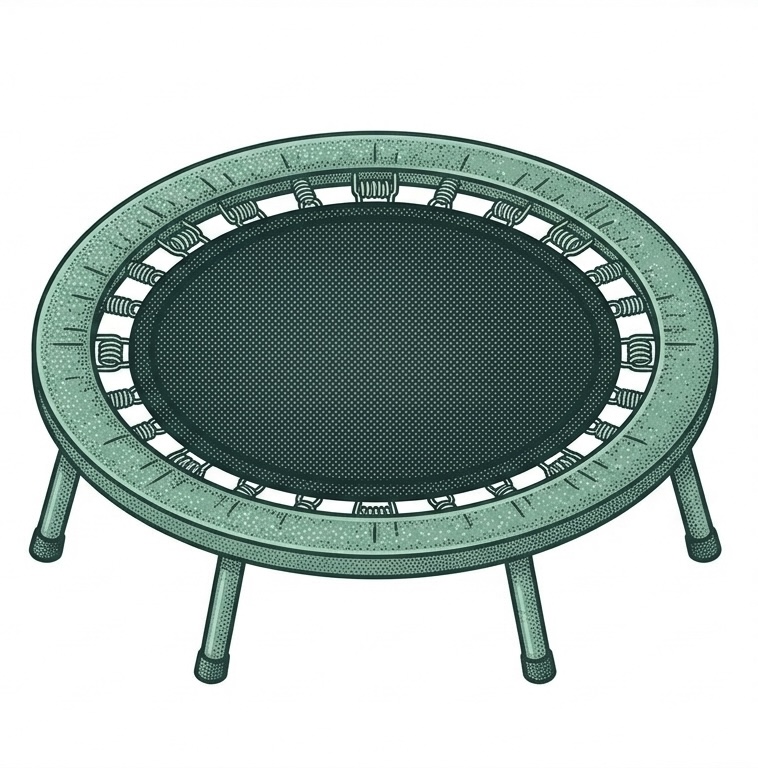
Jumping, particularly on a mini trampoline, is excellent proprioceptive input through the hips, knees, and feet. Stomping walks (marching heavily to a beat) can also work well as a transition activity or brain break.
For vestibular seekers (children who need more movement input), activities involving swinging, spinning, and rocking are the most effective. For vestibular avoiders (children who are over-responsive to movement), the goal is gentle, gradual exposure with complete control. Never forcing movement on a child who is distressed by it. Purpose-built stepping stones and balance courses can also give vestibular seekers and avoiders a shared activity, since the pace and height are entirely up to the child, which is exactly what my new review of sensory stepping stones covers.
The back-and-forth motion of a swing is one of the most organising vestibular inputs available. Slow, rhythmic swinging is calming; faster, more unpredictable movement is alerting. A garden swing or indoor sensory swing both work well.
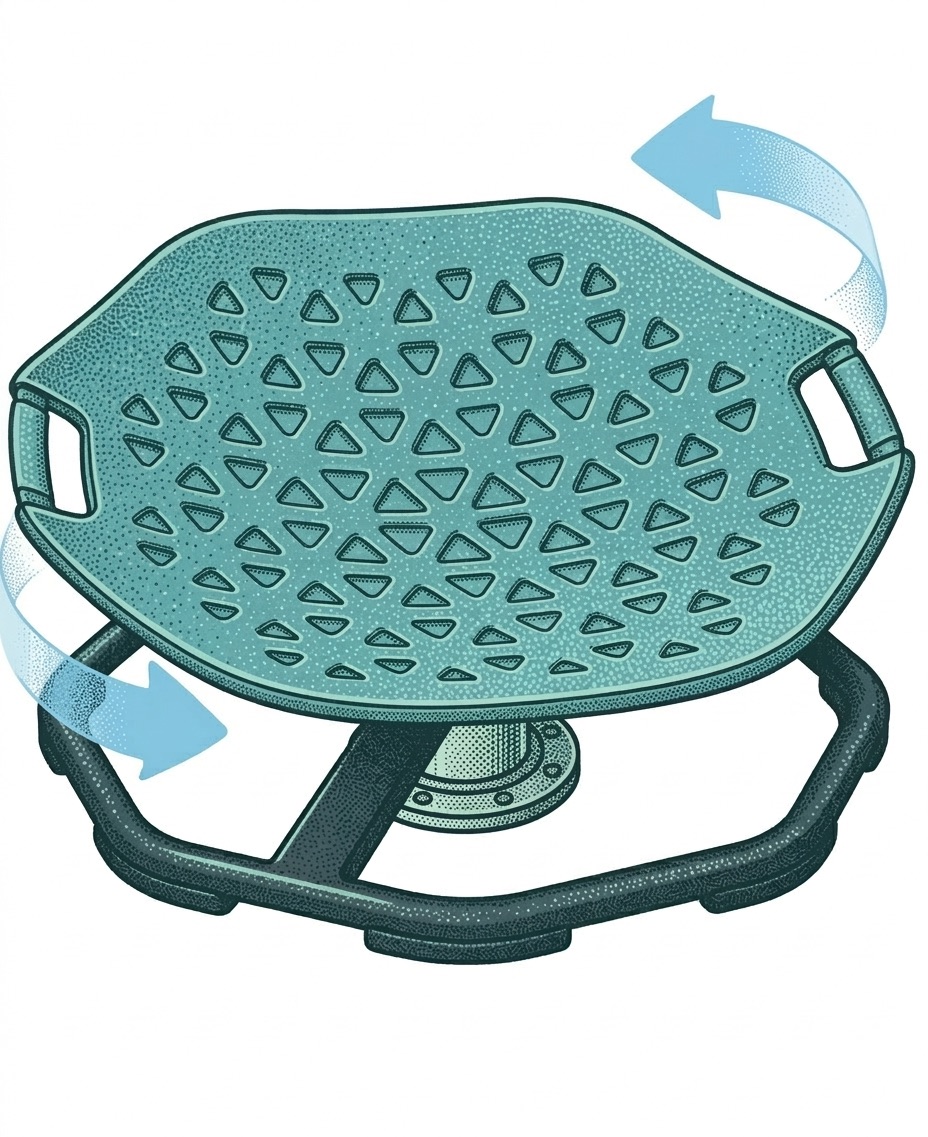
Spinning meets vestibular seeking needs very effectively, but OTs advise caution: it's easy to overstimulate the vestibular system, which can cause nausea, flushing, or increased dysregulation. If your child spins, monitor them closely, and if they've had enough, stop means stop. Spinning chairs and roundabouts are common outlets.
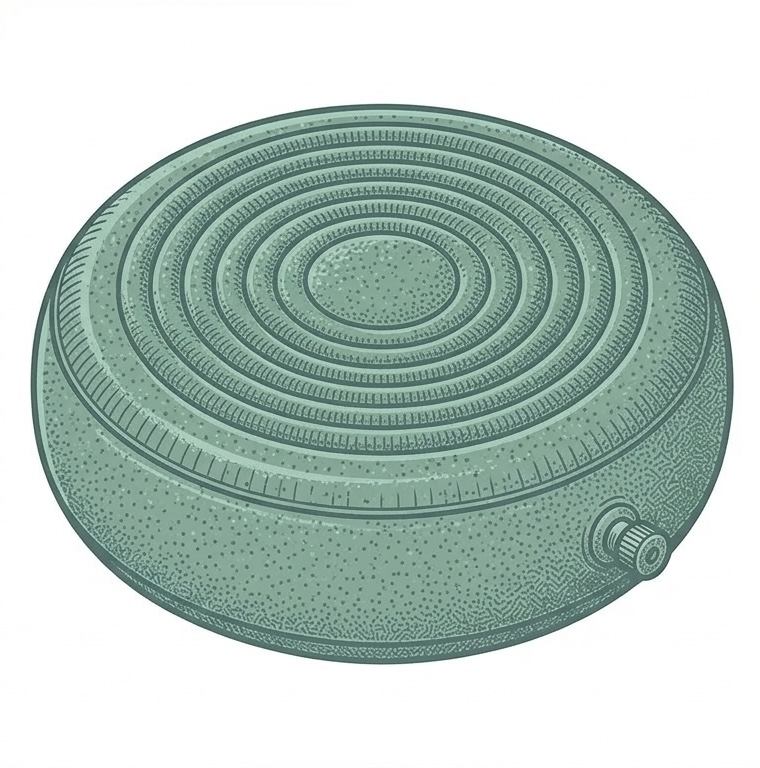
Rocking in a chair, on a wobble cushion, or on a balance board provides steady vestibular input that many children find regulating rather than alerting. It's often easier to accommodate in classroom settings than spinning.
Rolling down a grass slope, forward rolls on a mat, and similar ground-level tumbling activities provide rich vestibular input in a form that many children find natural and fun, and that doesn't carry the overstimulation risk of spinning.
Inverting the head is a particularly powerful vestibular input. Hanging upside down from climbing equipment, doing forward rolls, or even just lying with the head over the edge of a bed all provide this. Useful for children who strongly seek this kind of input.
Everything above can help, but it works best when it's informed by a proper assessment of your individual child's sensory profile. Every child processes proprioceptive and vestibular input differently, and the activities that help one child may not work for another.
A paediatric occupational therapist can assess which systems are under or over-responsive, how severe the differences are, and what combination of activities is likely to be most effective. This forms the basis of a sensory diet: a personalised plan of sensory activities built into the child's day to keep their nervous system regulated.
In the UK, you can ask your GP for a referral to community paediatric OT, or speak to your child's SENCO. If your child has an EHCP, OT input can be written into their provision. Private OT assessment is also an option if NHS waiting times are a barrier.
One important note on spinning: the vestibular system is the easiest to overstimulate. OT sources consistently advise that spinning activities should be monitored carefully. Watch for signs of overstimulation including nausea, skin flushing, and increased dysregulation. If your child is working with an OT on vestibular activities, follow their guidance on duration and frequency. More is not always better.
Chewing is worth a special mention because it's so commonly misunderstood. Chewing on clothing, pencils, or other non-food objects is very often proprioceptive seeking via the jaw. One of the richest sources of this kind of input available. It's not a habit to simply stop; it's a need to redirect.
Chewing is one form of stimming among many, and the same logic applies across the rest. My guide to stimming covers which sensory system each kind of stim is feeding.
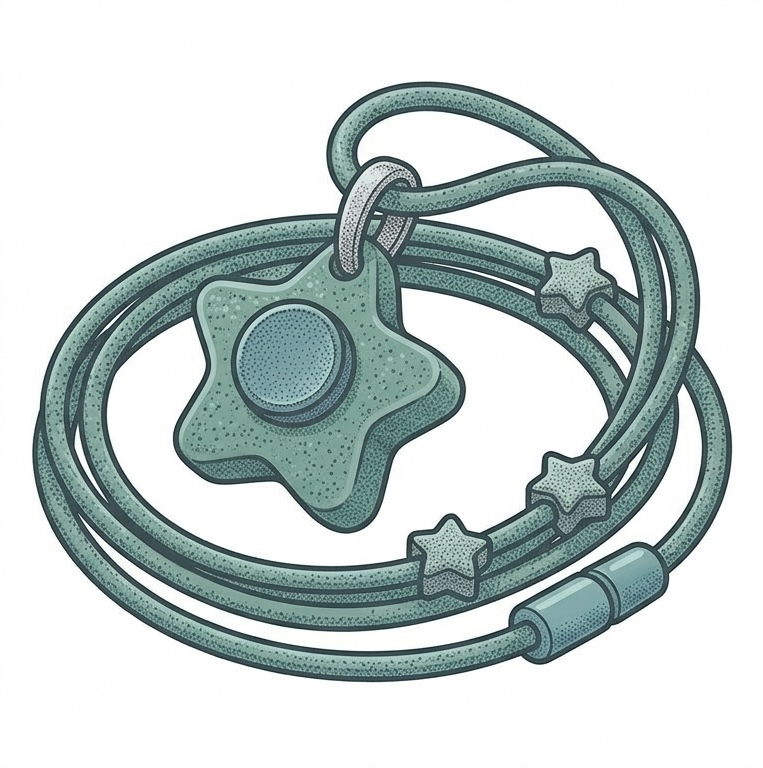
Chewable jewellery (necklaces or bracelets designed for the purpose) gives children a safe, socially acceptable outlet for oral proprioceptive needs. They're widely used in school settings and recommended by many OTs as part of a sensory routine.
A few things that come up often.