Product Review
Best Weighted Blankets for Children
The deep pressure input of a weighted blanket can be calming at bedtime for children who struggle to settle. Here's what we'd recommend.
When your child can't sleep, nobody sleeps. Here's what's really going on, and the strategies that make a genuine difference for autistic and ADHD children.
I'm a parent, not a clinician. This guide draws on my own experience with Ella and Jude, and on published information from the NHS, peer-reviewed research (PMC/NIH), Options Autism, Cerebra, and Bristol Autism Support. It is not medical advice. If you're concerned about your child's sleep, speak to your GP.
If you're reading this at 11pm because your child still hasn't settled, or because you've been awake since 4am, I want to start by saying: you're not failing. Sleep problems are one of the most common and most exhausting challenges in neurodivergent families, and they're rarely about routine or willpower. If sleep difficulties are affecting school and you need to put that in writing — to request adjustments or flag concerns — my School Meetings & Communication Pack covers that.
The research backs this up. Studies suggest that somewhere between 32% and 71% of autistic children experience significant sleep difficulties, and sleep problems affect up to 70% of children with ADHD (PMC/NIH). This is not a parenting problem. It's a neurological one.
Children who are both autistic and ADHD tend to have the hardest time of it, since the two conditions disrupt sleep independently and then compound. My guide to AuDHD covers the overlap.
That doesn't mean there's nothing to be done. But it does mean the solutions often look different from what works with neurotypical children. This guide covers why neurodivergent children struggle to sleep, what you can do about the environment and the routine, and when to push for more support.
There's rarely just one reason. For most neurodivergent children, sleep difficulties come from several directions at once.
Melatonin is the hormone that tells the brain it's time to sleep. Many autistic children and children with ADHD don't produce it at the right time, or in the right quantities. The body clock is genuinely running on a different schedule, so when you're trying to get your child to sleep at 9pm, their brain may not be receiving any biological signal that it's time to wind down.
This is one reason why some children can lie awake for hours without any obvious anxiety: they're simply not tired yet, neurologically speaking, even if they're exhausted from the day.
The bedroom at night is a very different sensory environment from the rest of the day: quieter, darker, with different textures and temperatures. For a child who is hypersensitive, all of those things can be actively uncomfortable rather than soothing. The feel of bedding against skin, the sound of pipes or traffic that most of us filter out, a sliver of light under the door. Any of these can be enough to prevent sleep, or to wake a child who had finally settled.
Ella used to complain that she could hear her own heartbeat at night. It sounded like she was being dramatic, but it's a real phenomenon, when the daytime noise drops away, sensory input that was always there becomes much more noticeable. It took us a while to understand that the bedroom wasn't quiet enough for her.
Bedtime requires a significant shift, from activity to stillness, from social to solitary, from stimulation to nothing. For autistic children especially, transitions are hard. The evening wind-down isn't just about tiredness; it's asking the child to move from one state to another, repeatedly, and to let go of the day. That's a big ask.
Children with ADHD often describe bedtime as the most frustrating part of the day, because the quiet that's supposed to help them sleep makes things worse. With fewer external distractions, thoughts race. The body might be still, but the brain is anything but. Some children also experience a "rebound" effect in the evening as their ADHD medication wears off, and hyperactivity or emotional intensity can temporarily increase right around bedtime.
Anxiety is a significant co-occurring condition for many autistic children and children with ADHD, and it often spikes at night. The loss of structure, the darkness, the separation from parents, the replaying of things that happened during the day. Bedtime gives anxiety a lot of room to work with. If your child seems to find increasingly creative reasons not to sleep (needing water, needing the toilet, worrying about tomorrow), anxiety is often behind it.
"For a long time I thought Jude's bedtime resistance was behaviour: he was playing up, avoiding sleep. But when I sat with what was happening, I realised he wasn't tired at 8pm. His brain was still completely switched on. Stopping fighting the clock and working with his natural rhythm, later bedtime, strict morning wake time, was the thing that finally started to shift things."
Before looking at routines or medication, it's worth going through the bedroom environment systematically. For a sensory-sensitive child, getting this right can make a bigger difference than almost anything else.
Blackout blinds or curtains are often transformative. Even small amounts of light: a street lamp through thin curtains, a device charging light, the glow under a door, can disrupt melatonin production and disturb sleep for sensitive children.
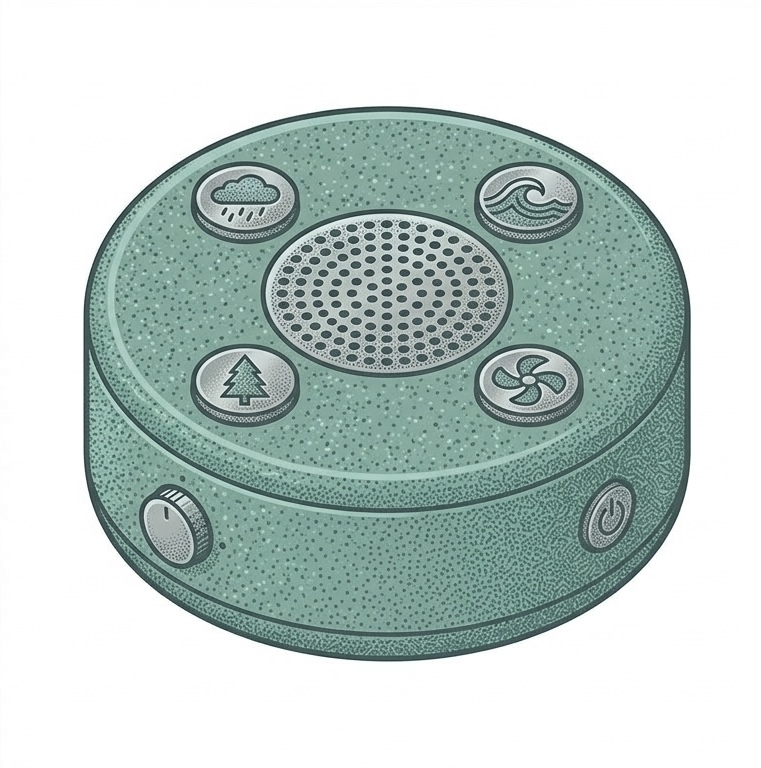
White noise machines can mask the unpredictable sounds that startle sensitive sleepers: traffic, voices from downstairs, pipes. The key is consistent background sound rather than sudden silence, which can itself become a trigger.
Most children sleep better in a slightly cool room. If your child is always throwing off covers or always buried under them, it may be worth adjusting the room temperature rather than the bedding weight.
Check every point of contact: pyjama labels, fabric type, duvet fill, the texture of the sheet against skin. For hypersensitive children, a scratchy seam can be as disruptive as a bright light. Seamless pyjamas and soft bedding make a real difference.
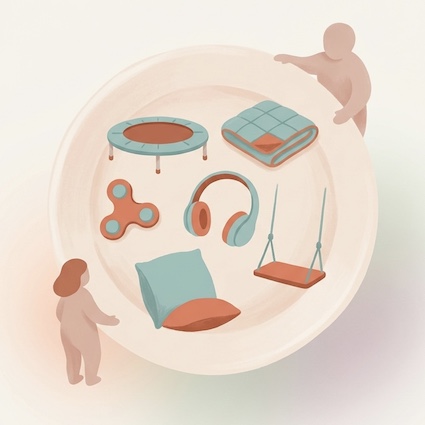
Some children. Ella included — find weighted blankets genuinely calming at bedtime. The deep pressure input can help regulate the nervous system and reduce that "buzzy" feeling that makes lying still so hard.
The blue light from phones, tablets, and TVs suppresses melatonin production, particularly problematic for children whose melatonin is already unreliable. NHS guidance recommends stopping screens at least an hour before bed.
A bedtime routine is the right idea, but what it looks like for neurodivergent children is often different from the standard advice. "Same time, warm bath, story, lights out" works well for many neurotypical children. For neurodivergent children, you often need more structure, more flexibility, and more patience with the timeline.
Transition to calm takes much longer for many neurodivergent children. If you're aiming for lights-out at 9pm, the wind-down process may need to start at 7:30pm. This isn't being precious. It's accounting for genuine neurological differences in how long it takes to shift states.
A visual timetable of the bedtime steps: shower, pyjamas, teeth, story, lights out, which removes the need to negotiate or explain what's happening next. For autistic children especially, knowing what's coming reduces the anxiety around transitions. NHS ADHD guidance specifically recommends visual schedules for bedtime routines.
Colouring, jigsaws, audiobooks, and simple puzzles wind the nervous system down. Screen-based games, anything competitive, or high-energy physical play does the opposite, even if your child looks tired. The last hour before bed should feel quieter, slower, and lower-stakes than the rest of the day.
A consistent goodnight phrase — said at the same point in the routine, in the same way, becomes a cue the brain starts to recognise. NHS guidance on ADHD sleep specifically recommends this: once you've said goodnight, avoid eye contact, keep the room dim, and repeat the same phrase if the child gets up. The predictability itself is part of what works.
The wake time anchors the whole sleep cycle. If your child sleeps in at weekends, the biological clock shifts, making Monday morning even harder, and delaying the next night's sleep onset. Keeping roughly the same morning time, even after a rough night, helps stabilise the rhythm over time.
Some children's sleep difficulties go beyond what routine and environment changes can fix. If you've tried the above consistently for several weeks and your child still isn't sleeping, or if they're so tired that it's affecting their behaviour, mood, or lowering their meltdown threshold — it's time to push for more support.
Start with your GP. They can rule out physical causes that are easy to overlook: reflux is more common in autistic children than is often realised; sleep apnoea (disrupted breathing during sleep) can cause frequent waking and poor sleep quality and is also more prevalent in neurodivergent children; and bedwetting, which is significantly more common in autistic children and worth raising directly rather than assuming it will resolve on its own — my guide to toileting and autism covers what tends to help. A GP referral to a paediatrician opens the door to further assessment and, if appropriate, medication.
Prescribed melatonin is available on the NHS for autistic children and children with ADHD whose sleep difficulties haven't responded to behavioural approaches. It needs to be initiated by a specialist. Your GP can't prescribe it directly, but can refer you. NHS guidance requires that sleep hygiene approaches have been tried first, typically for at least two to three months, so keep a sleep diary to show you've done this.
Melatonin isn't a fix on its own — it's most useful as a way of shifting the body clock so that the behavioural strategies you've put in place have a better chance of working. It's typically used alongside (not instead of) environmental and routine approaches. The specialist will advise on timing and dose, but it's generally taken 30 to 60 minutes before the desired bedtime.
Keeping a sleep diary helps. Before any GP or paediatric appointment, note down: what time your child gets into bed, how long it takes to fall asleep, any night wakings, what time they wake in the morning, and any other observations (restlessness, sleepwalking, unusual breathing). Even two weeks of records makes the appointment significantly more productive.
Cerebra (cerebra.org.uk) is a UK charity that offers a free sleep support service specifically for families of children with brain conditions, including autism and ADHD. They have experienced sleep practitioners who understand neurodivergence, and the support is free. Waiting times exist, but many families find it much more practically useful than generic NHS sleep clinic advice. It's worth knowing about even if you're not in crisis.
The Sleep Charity (thesleepcharity.org.uk) offers advice and resources specifically for children with SEND, including a helpline. They're a useful additional resource while you're waiting for NHS or specialist support.
"We went to the GP so many times before anyone mentioned Cerebra. Don't wait to be referred. You can contact them directly. The sleep practitioner we spoke to was the first person who understood that our situation wasn't about us being inconsistent. That alone was worth something."
This section matters. A family where the adults are chronically sleep-deprived cannot function well, and that has a knock-on effect on everything, including your child. When you're exhausted, it's harder to stay calm at bedtime, harder to be consistent, harder to think clearly about what to try next.
If you have a partner, share the night-time duty wherever possible. If you're doing it alone, try to protect some sleep in whatever way you can, napping when your child naps if they still do, asking a family member to take a morning at weekends so you can sleep in. It's not indulgent; it's functional.
And it's worth knowing that other parents are going through this. Facebook groups like Autism Sleep Support UK and ADHD Kids UK have active communities of parents sharing what's worked. Sometimes just knowing you're not the only one in this situation at midnight helps.


The things that come up most often around neurodivergent children and sleep.