Sensory Socks and Underwear
The best sensory socks and underwear for children who hate seams and labels
Seamless socks, hand-linked toes, tagless waistbands and hidden elastic: the first-thing-on-in-the-morning basics that can make or break the school day for a tactile-sensitive child.
Written by Sarah M.
Contains affiliate links
Updated May 2026
⭐ Sarah's Top Pick
"There was a stretch in Year 1 where Ella refused socks completely. She'd come downstairs in tights, in bare feet, in slippers, in anything except actual socks, and I'd run out of ideas. The SockShop bamboo pack was the first thing she put on without picking at the toe seam. We've bought the same pack every September since. Plain black, school-compliant, and most importantly, no toe ridge."
— Sarah M., on the SockShop Bamboo Socks with Comfort Cuff
I'm a parent, not an occupational therapist, but if your child is tactile-sensitive, you already know what mornings look like. Ella is autistic and hypersensitive to touch, and for years the first ten minutes of every school day were spent fighting socks. A label scratching the back of the neck. A toe seam rucked up over her smallest toe. An elastic waistband she could feel through her uniform. Small on their own; together, enough to set the tone for the whole day. Socks and underwear are the first things on in the morning. Get them wrong and you're starting the day already two steps into sensory overload territory. Get them right and you've removed one of the most preventable contributors to the morning meltdown. The four below are the ones that have actually worked in our house, plus the boys' option that solved the same problem for Jude. If you've been picking labels off school uniform with a pair of nail scissors for months, this is the page for you.
What made the top drawer
Four sensory-friendly options for the top drawer: two seamless sock multipacks and two tagless underwear ranges with hidden elastic and water-based printing instead of labels.
#1 Top Pick
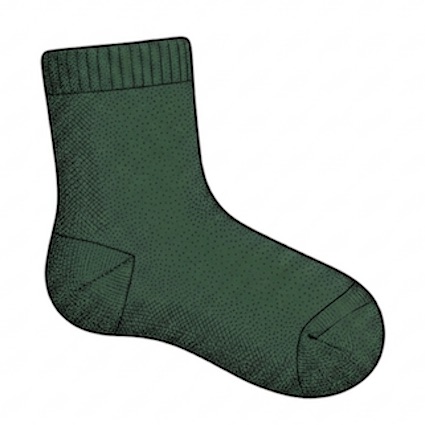
If a sensory-sensitive child needs school socks, this is what I'd buy. The toes are hand-linked rather than stitched flat, which means there's no ridge of seam pressing against the toe joints when shoes are on. The comfort cuff is the other key feature: a non-elastic top that holds the sock up without leaving a red ring around the calf at the end of the day. Bamboo viscose is naturally soft, temperature-regulating and breathable, which matters more than it sounds for children whose feet get hot easily or who notice damp socks in a way other children don't. They come in plain black, white and navy (school-uniform-compliant for most state schools in England) plus denim blue, pink and red for non-uniform days. The 3-pair and 5-pair packs work out reasonable on a per-pair basis, and they wash well: we're on year three of the same multipacks with no thinning at the heel. Sizes run age 1 through 14, so they grow with the child rather than aging out at primary.
Pros
- True hand-linked seamless toes (no flatlock ridge)
- Non-elastic comfort cuff
- Bamboo viscose is soft and temperature-regulating
- School-uniform colours available
- Wide age range (1–14)
- Durable through repeated washing
Cons
- Plain colours only in school packs (no patterns)
- Bamboo viscose can pill slightly after heavy use
Check Price on Amazon →
#2
This is the underwear that ended the label-cutting routine in our house. The size and care information is printed onto the inside of the waistband using water-based ink rather than attached as a separate tag, which means there is genuinely nothing for a tactile-defensive child to fixate on. The elastic waistband is wrapped in fabric — you can still feel it holds, but it doesn't dig in or rub against the skin, which is the failure mode of most children's underwear at this price point. The fabric is 96% combed cotton (long-fibre, smoother weave) with a 4% elastane stretch for fit, and the construction is properly seamless rather than overlocked. The design range is good if your daughter has strong preferences about what underwear looks like, which many sensory-sensitive children do: mermaids, flowers, dogs, cats, hearts. £19.99 for the multipack is mid-range for tagless options on Amazon UK, and they last well through repeated washes (the printed waistband doesn't peel, which is a common failing of cheaper "tagless" designs).
Pros
- Water-based printed labelling (truly tagless)
- Fabric-wrapped elastic doesn't dig in
- Seamless construction throughout
- Wide age range (18 months to 12 years)
- Several design options for children with strong preferences
Cons
- Sizing runs slightly small (size up if between sizes)
- Print designs may not appeal to older girls (tween-and-up)
Check Price on Amazon →
#3
The boys' version of the BliBliTaTa range, and the one that worked for Jude. He's not as severely tactile-defensive as Ella is, but he's an ADHD sensory seeker who gets hung up on small physical irritations once he notices them, and a label rubbing his skin is the kind of thing that can derail a school morning. The construction is the same as the girls' range: water-based printing instead of labels, fabric-wrapped hidden elastic, seamless throughout, 96% combed cotton. The boys' patterns lean towards what a primary-school-aged boy is likely to actually want to wear (dinosaurs, tractors, sharks, space, trucks), which matters because the most beautifully constructed underwear is useless if the child refuses to put it on. The M-shaped ventilation in the gusset is a small but useful detail for active boys who get hot easily.
Pros
- Same tagless, seamless construction as the girls' range
- Patterns most primary-aged boys will engage with
- M-shaped gusset ventilation for active children
- Hidden fabric-wrapped elastic
- 96% combed cotton, soft against the skin
Cons
- Sizing runs slightly small (size up if between sizes)
Check Price on Amazon →
#4
A weekend and home-day option for the child who feels strongly about colour and tolerates plain school socks but won't wear them outside school hours. Ella went through a phase of refusing anything plain on a Saturday; the rainbow stripes were what got her into socks on a non-uniform day. The construction is seamless at the toe (similar principle to the SockShop bamboo, though knitted as a tube rather than hand-linked), and the tube-style top doesn't squeeze the calf. Material is 70% combed cotton with a small amount of polyamide and elastane for stretch and durability — slightly less premium-feeling than the SockShop bamboo, but still soft against the skin and well-tolerated by tactile-sensitive children in our experience. Five different colour-stripe sets across the multipacks means there's enough variety to satisfy a child who likes to pick a different pair each morning. The sizing runs age 3 through 15, with separate size bands for 6–8 and 9–12 years, which is the age range where most "kids' socks" multipacks stop being useful. Not the right choice for school uniform, but a useful second pack for everything around school.
Pros
- Seamless toe construction
- Bright colour-stripe designs (engagement for children who refuse plain socks)
- Non-squeezing tube top
- Combed cotton main fibre (soft, breathable)
- Sizing extends to age 15
Cons
- Not school-uniform compliant (bright stripes)
- Seamless via knit construction rather than hand-linked toes
- Cotton blend rather than bamboo (slightly warmer in summer)
Check Price on Amazon →
Things worth knowing first
The questions worth thinking through before you buy.
🧦
Seamless vs flatlock
Most "seamless" socks are actually flatlock, which means the toe seam is stitched flat against the fabric rather than left as a raised ridge. Better than a traditional seam, but still detectable to a child with strong tactile defensiveness. Properly seamless socks are knitted as a tube and closed by hand-linking the toes, leaving no seam at all. The SockShop bamboo socks above are hand-linked; this is the gold standard for sensory-sensitive feet.
🏷️
Tagless really means printed
Properly tagless underwear has size and care information printed directly onto the fabric, ideally using water-based ink with no raised edges. Watch out for products marketed as "tagless" that simply have a small fabric label sewn into a side seam — better than a back-of-neck tag, but not seamless. If your child cuts labels out of every garment, choose printed-only.
⚪
The hidden elastic question
Standard elastic waistbands have bare elastic exposed against the skin, which many neurodivergent children find unbearable by the end of the day. Look for fabric-wrapped or covered elastic, where the elastic is enclosed in soft cotton or jersey. Both BliBliTaTa ranges above use covered elastic — you can feel it holding without the digging-in sensation that drives children to pull at the waistband.
📏
Size up if between sizes
For a tactile-sensitive child, slightly loose is almost always better than slightly tight. A snug waistband or a sock that grips the foot reinforces every contact point against the skin. If your child is between sizes, go with the larger. If you're buying ahead of a new school year, wash everything several times before it's worn and trial it at home first, which I go into in my guide to going back to school with a neurodivergent child. Most multipacks in the brands above run small, so going up is usually the right call anyway.
🎨
Let your child choose the design
Sensory-sensitive children often have strong preferences about how clothes look, and they're not being difficult — the visual element is part of how the garment feels to them. If your child cares about the pattern, factor that in before construction. The best-constructed sock in the world is useless if it stays in the drawer because your child won't wear plain black. This applies to weekend socks more than school: the school multipack just needs to meet uniform policy.
🚪
The morning-uniform stack
If you're trying to defuse the school morning, look at the whole stack of clothing in the order it goes on. Socks and underwear first, then trousers or skirt and a shirt, then jumper and shoes. Removing the friction from the first two layers makes the rest of the routine easier, which matters because autistic children mask through the school day and arrive home already at the end of their reserves. A child who hasn't fought their underwear before breakfast has more capacity for everything that comes after.
🧻
Moving out of nappies
If you're mid toilet-training, comfortable underwear removes one more barrier on top of everything else going on. A waistband that doesn't dig in and a fabric that doesn't distract makes it easier for a child to notice what their body is doing, rather than fighting the underwear itself. My guide to toileting and autism covers the wider process, including why it often takes longer for autistic children.
Frequently asked questions
The questions parents ask most about sensory socks and underwear.
Why are socks and underwear such a problem for sensory-sensitive children?
For children with tactile defensiveness, the first things put on the body in the morning set the tone for the rest of the day. A sock with a thick toe seam pressing on a sensitive toe joint, a label scratching the back of the neck, or an elastic waistband digging into the skin can build into a felt sense of wrongness that the child finds hard to name and harder to ignore. Many neurodivergent children process tactile input differently: what feels mildly uncomfortable to one child feels genuinely intolerable to another. Removing those small irritants — seamless toes, hidden elastic, tagless labels — often makes the difference between a calm morning and a meltdown before breakfast.
What is the difference between seamless and flatlock socks?
Properly seamless socks have no seam at the toe at all: they're knitted as a continuous tube and closed by hand-linking the toe so the join is invisible. Flatlock socks have a seam, but it's stitched flat so it sits closer to the fabric rather than ridging up. For most sensory-sensitive children, hand-linked seamless socks are noticeably more comfortable than flatlock. The difference is subtle to an adult hand and very obvious to a child with tactile defensiveness.
Are tagless underwear really tag-free?
True tagless underwear has the size and care information printed directly onto the fabric using water-based ink rather than attached as a separate label. The best designs also use what's called heat-transfer printing without raised edges, so there's no ridge where the print sits. Some products marketed as tagless still have a small fabric label sewn into the side seam: better than a back-of-neck tag, but not truly seamless. Check listings carefully. The BliBliTaTa range featured here uses water-based printing directly onto the inside of the waistband, which is as close to truly tag-free as the Amazon UK market currently offers.
My child cuts the labels out of every garment. Should I just keep doing that?
Cutting labels out works in the short term but often leaves a small stub of fabric and stitching that can be just as irritating as the original label, particularly once it's been through the wash a few times. Buying genuinely tagless garments is more reliable. It also costs less in the long run than continually replacing items where the cut-label stub has become unbearable. For a child who has built up a strong dislike of any back-of-neck disturbance, removing the source is more sustainable than removing the symptom.
Should I let my child wear sensory socks and underwear to school?
Yes, and most schools won't notice. Plain black, white or navy sensory socks meet standard uniform policy, and underwear is invisible by definition. The benefit shows up in everything around it: a child who isn't fighting their clothes all day has more capacity to manage the actual demands of school. If your child has an
EHCP or SEN support plan, comfortable basic clothing is exactly the sort of low-cost, high-impact reasonable adjustment a school should welcome. The harder negotiations tend to be over visible items like soft-waistband trousers or seamless leggings; socks and underwear rarely come up.
How many pairs should I buy when starting out?
Multipacks of five to seven pairs of socks are the standard, which gives you a working school week with one spare. For underwear, seven to ten pairs gives enough rotation that you're not washing every other day. If you're switching a child who has previously rejected most clothing, buy one multipack first and check the fit and feel before committing. Sizing varies considerably between brands, especially across socks: a size labelled for age 7 in one brand can fit very differently in another.