Sensory Tools
The best sensory body socks for deep pressure input
OT-recommended, parent-tested. If your child craves being squeezed, wrapped, or squished, a body sock might be exactly what they need.
Written by Sarah M.
Contains affiliate links
Updated April 2026
A body sock is, mechanically, a stretchy lycra pod that a child climbs inside. If you're deciding between a body sock and other deep pressure tools, my guide to weighted deep pressure tools compares body socks, weighted blankets, lap pads, compression vests, and weighted stuffed animals side by side. What it does is harder to convey: it provides constant, all-over deep pressure input that for many sensory children feels like the safest place in the world. Ella's body sock has become her decompression chamber. She climbs in after school and emerges, twenty minutes later, like a different child. I'm a parent rather than an OT, but I've watched ours work consistently enough through after-school restraint collapse, sensory overload, and the daily slog of seven-year-old emotions to recommend them without hesitation. The five picks below cover the full range: classic body socks, compression tunnels, and a bedtime-specific option for children who don't tolerate a weighted blanket but still need the same compression sensation to sleep.
The five worth climbing into
Five deep pressure picks worth considering: classic body socks, compression tunnels, and a bedtime option. All checked for quality, safety, and availability on Amazon UK.
★ Top Pick
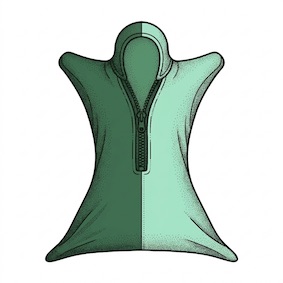
Sensory Owl is a UK sensory specialist brand, and this ghost-style body sock is their flagship. The design is simple but clever. A roomy pod shape that allows your child to curl up inside, stretch out, or move around freely, with the elastic fabric providing gentle all-over compression throughout. There are no zips, no scratchy seams, and no fastenings that could snag or cause discomfort. Ella took to ours almost immediately. Within a few sessions it had become part of her after-school wind-down. Inside the sock, on the sofa, completely unbothered by the world. It comes in six sizes including adult, which is genuinely unusual and makes it a long-term investment rather than something you'll outgrow in a year.
Pros
- Trusted UK sensory brand
- Six sizes including adult
- No zips, seams or fastenings
- Breathable elastic fabric
- Adjustable fit: tighter for therapy, looser for relaxation
Cons
- Higher price point than budget options
- Ghost shape may not suit all children's preferences
Check Price on Amazon →
#2
If you want to try a body sock without committing to a higher price, the SZSMART is the one to go for. It's a straightforward lycra body sock, lightweight, breathable, and made from a high-elasticity fabric that provides decent all-over compression. The button fastening at the top is a thoughtful safety detail: no zip to jam or snag, and children can open it themselves without help. It's sized for children between 114–137cm, which roughly covers ages 5–10 depending on your child. For the price, the quality is solid. A good starting point if you're not sure whether your child will take to the body sock experience at all.
Pros
- Excellent value for money
- Safe button fastening, no zip
- Lightweight and breathable
- Good entry-level option
Cons
- One size range only: won't suit younger or older children
- Less brand recognition than Sensory Owl
Check Price on Amazon →
#3
This one from Sensory Owl does something clever: it functions as both a compression crawling tunnel and, when secured at both ends, a full-body sensory sack. The net panel on one side is a genuinely useful safety feature. Children can see out and you can see in, which removes any anxiety about feeling enclosed. For children who love proprioceptive input but also need to be able to move and wriggle, rather than staying still inside a sock, this gives them far more options. Jude uses ours as a crawling challenge; Ella uses it as a reading pod with the ends gathered around her. It's a versatile piece of kit that earns its place in any sensory setup.
Pros
- Two-in-one: tunnel and body sack
- Net panel: child can see out, parent can see in
- Trusted Sensory Owl brand
- Suits very active children
Cons
- Bulkier to store than a standard body sock
- Needs securing at both ends to use as a body sack
Check Price on Amazon →
#4
This isn't a body sock in the traditional sense: it's a full-length compression sheet designed primarily for bedtime. But it deserves a place on this page because the deep pressure mechanism is exactly the same: the stretchy spandex fabric wraps around the body and provides that all-over hugged feeling that many sensory children find deeply calming. At 86 × 147cm it fits most children and many adults, and it's a useful alternative to a weighted blanket for children who find weight uncomfortable but still need that compression sensation to settle at night. The 4.6-star rating is one of the highest on this page. Parents report it helps significantly with sleep onset.
Pros
- Highest rated product on this page
- Great for bedtime and sleep
- Cooler and lighter than a weighted blanket
- One size fits most children and adults
Cons
- Designed for lying down, not a play tool
- Less versatile than a standard body sock
Check Price on Amazon →
#5
At three metres long, this ODOXIA tunnel is primarily a crawling and movement tool, but the product images show children using it exactly like a body sock: lying inside it wrapped in the fabric compression. For children who want deep pressure input alongside movement and exploration rather than stillness, it's a strong option. The breathable, non-restrictive polyester fabric gives decent compression without feeling suffocating, and the length means children can roll, stretch, and move inside it freely. It works particularly well for sensory seekers who won't stay still long enough to use a standard body sock. A solid active-play pick at a reasonable price.
Pros
- Great for active, movement-seeking children
- Can be used as a full-body wrap
- Breathable and non-restrictive
- Good value for the size
Cons
- Primarily a tunnel: body sock use is secondary
- Large footprint: needs space to use properly
Check Price on Amazon →
What to check before buying
Body socks come in a few different formats. Here's what actually matters when choosing.
🧦
Format: sock, tunnel, or sheet?
Classic body socks are the most versatile. Your child gets inside and can curl up, stretch, or move around. Compression tunnels suit active children who want to crawl and roll as well as wrap up. Compression sheets are designed for lying still, making them ideal for bedtime. Think about when and how your child will use it before choosing. For seated daytime use specifically, at a desk or in the car, a weighted lap pad is a smaller, more portable alternative.
📏
Size
Fit matters more than you might expect. Too small and the resistance becomes uncomfortable rather than calming; too large and you lose the deep pressure effect entirely. Most products include a height or age guide. Measure your child before ordering. Some brands like Sensory Owl offer multiple sizes including adult, which is worth paying for if you want long-term use.
🧵
Fabric and breathability
Look for stretchy, breathable fabric — lycra, spandex, or polyester blends are all common. Breathability is important because children generate a lot of heat inside these, especially when active. Avoid anything that feels rigid or scratchy before purchase. Good fabric also retains its stretch after repeated washing — cheaper blends can go baggy over time.
🔓
Safe entry and exit
Your child should always be able to get themselves out easily. Look for open ends, button fastenings, or net panels rather than zips. Zips can jam, and a child who feels stuck will panic. Products with a see-through or net section are particularly good for children who are anxious about being enclosed, as they can maintain visual contact with the room.
🏠
Active play or calm time?
Some children want to move inside their body sock: rolling, stretching, wriggling. Others want to be still. A tunnel format suits movers; a classic sock or compression sheet suits children who are looking to decompress and regulate quietly. If your child does both at different times, a dual-use tunnel like the Sensory Owl option gives you more flexibility.
🧺
Washing
These get used regularly and need frequent washing. Check the care label before buying. Most are machine washable at 30–40°C and should be air dried rather than tumble dried to preserve the fabric's stretch. If your child uses theirs daily, it's worth having two so one can be in the wash without leaving them without.
Frequently asked questions
What parents want to know before buying a body sock.
What does a sensory body sock actually do?
A sensory body sock provides deep pressure input, the same gentle, all-over compression that makes weighted blankets so effective for many children. The lycra fabric wraps around the body and provides proprioceptive feedback, which helps regulate the nervous system. For children who are
hyposensitive (sensory seekers), it gives the input their body is craving. For children who are hypersensitive, the predictable, even pressure can feel calming rather than overwhelming.
What age are sensory body socks suitable for?
Most sensory body socks are suitable from around age 3 upward. They come in a range of sizes covering toddlers through to older children and adults. Always check the size guide for the specific product. A sock that's too large won't provide the right resistance, and one that's too small may feel restrictive. Always supervise young children when using a body sock.
Are sensory body socks safe? My child might panic inside one.
Good quality body socks are made from breathable lycra and have open ends, so children can see through the fabric and are never sealed inside. Most children can get themselves in and out independently once shown how. But introduce slowly. Let your child explore it at their own pace before getting fully inside. Never force a child into a body sock, and always supervise during use, especially initially.
My child's OT mentioned body socks — should I get one?
If an OT has mentioned body socks as part of a
sensory diet, they're a good investment. They're one of the more versatile sensory tools available. They can be used for calming before a difficult activity, for proprioceptive input during a high-energy period, or simply as a preferred sensory activity. If you're buying without OT guidance, they're generally low-risk to try, but an OT assessment is always the best starting point for building a sensory diet.
How do I get my child to actually use it?
Make it their choice, not a task. Leave it accessible and let them come to it. Many children engage better if you model using it yourself first (yes, you'll look ridiculous. That's fine). Some children love being 'posted' into the sock by a parent; others prefer to climb in themselves. Combine it with something they already love: watching a show, listening to music, or doing a puzzle, so the sensory experience becomes associated with something positive.