Sensory Sorted Review
Best Ear Defenders for Noise-Sensitive Children
Five picks from baby defenders to specialist children's options, reviewed with SNR ratings throughout.
Three very different tools, one goal: making a loud world manageable for a noise-sensitive child. Here's how to choose, and why the answer is often more than one.
I'm a parent, not an audiologist. Ella is hypersensitive to noise, and we've used all three of these options over the years, in different situations. This guide is based on that experience and on published guidance from audiologists and sensory specialists. If your child has significant hearing sensitivity, your GP or OT can advise on the most appropriate protection for their specific needs.
When Ella was four, I bought her a pair of ear defenders and felt like I'd solved the problem. By the time she was seven, the same ear defenders were in her bag every morning and coming home unused every afternoon. She didn't want to be the child who wore the big cups. She'd rather be overwhelmed than different.
That's when I started actually understanding the differences between the three options, and realising they serve different purposes, different ages, and different kinds of noise sensitivity. I also realised that "which one" is rarely the right question. Most families end up using two of the three, each in a different context.
This guide covers all three options in full. There's already a dedicated comparison of ear defenders and earplugs on the site if that's your primary question. This page adds noise-cancelling headphones into the mix and maps all three against the situations parents ask about most.
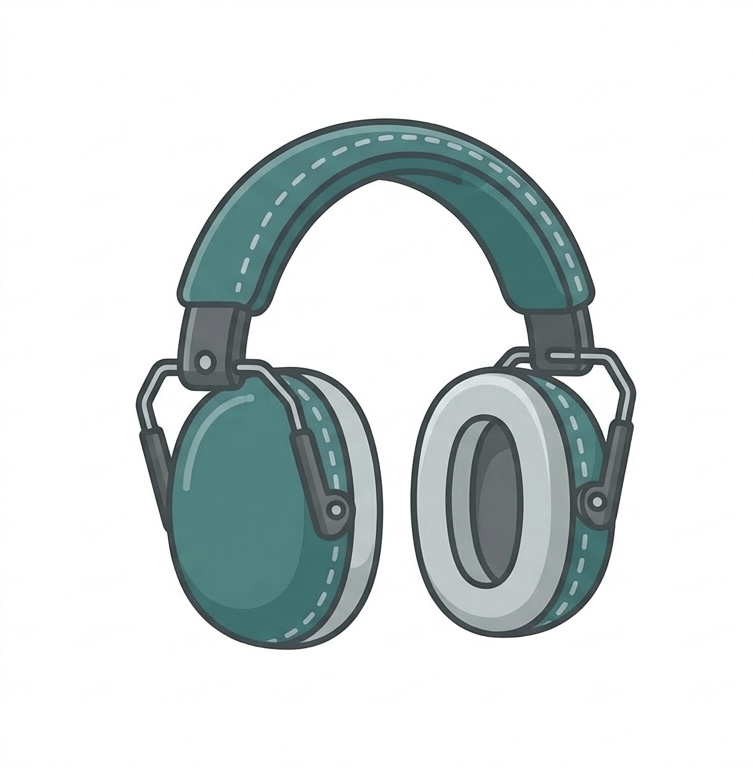
Over-ear cups with foam or gel cushions create a physical seal over the entire ear. High passive noise reduction, with no batteries and no charging. Best for very loud events and younger children.
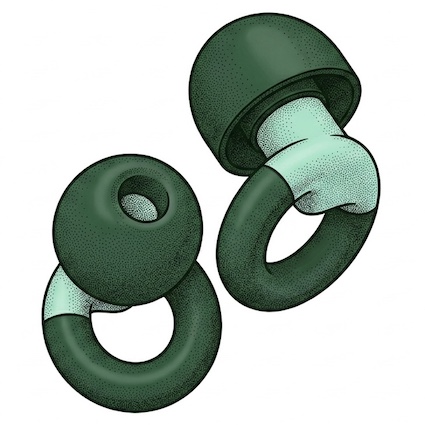
Sit inside the ear canal. Modern children's versions filter rather than block, reducing overall volume while keeping speech intelligible. More discreet, better for school. Age 5+ typically.
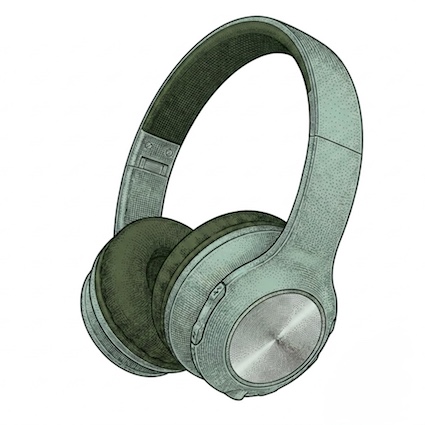
Over-ear headphones that use active noise cancellation (ANC) electronics to counter low-frequency ambient sound. Require charging. Best for travel, focus tasks, and older children who want discretion.
The key distinction to understand: ear defenders and earplugs are passive: they block or filter sound through physical means only. Noise-cancelling headphones add an active layer: a microphone picks up ambient sound and the electronics generate an opposing signal to cancel it. ANC is particularly effective on constant low-frequency sounds like engines, air conditioning, and background hum. It is less effective on sudden sharp sounds, voices, and irregular noise spikes.
This means noise-cancelling headphones are not simply "ear defenders with extras." For a child whose primary trigger is sudden unpredictable sounds (a fire alarm, a clatter in the corridor, a chair scraping), passive ear defenders will usually perform better.
| Ear defenders | Filter earplugs | Noise-cancelling headphones | |
|---|---|---|---|
| How they work | Physical seal over the ear — passive blocking | Acoustic filter in the ear canal — passive filtering | Physical + ANC electronics — active + passive |
| Noise reduction | High: 24–30 dB SNR typically | Moderate: ~16 dB SNR (Loop Engage Kids) | 20–30 dB combined (varies by model) |
| Best for sound type | All sound including sudden spikes | All sound — maintains speech clarity | Constant low-frequency sound (engines, hum, AC) |
| Speech audibility | Reduced — harder to hear people | Good — preserves speech clarity | Reduced — depends on ANC mode |
| Discretion | Visible — over-ear cups | Discreet — inside ear canal | Visible — similar size to ear defenders |
| Requires charging? | No | No | Yes — battery life is a practical issue |
| Suitable from | Baby/toddler (specialist versions) | Age 5+ typically | Age 5+, more practical from age 8+ |
| Best use cases | Fireworks, concerts, assemblies, events | School, supermarkets, daily wear | Travel, focused work, secondary school |
| ANC pressure sensation | N/A | N/A | Some children find ANC uncomfortable |
| Typical UK price | £15–£60 | £15–£30 (Loop Engage Kids 2: ~£24) | £30–£200+ |
Filter earplugs are the most practical choice for the school day. They sit inside the ear canal, which means other children can't see them, and they preserve speech clarity, so the child can still hear their teacher, participate in group work, and hold conversations without removing them. The Loop Engage Kids 2 is the most recommended children's version in the UK: 16 dB SNR, soft silicone tips, suitable from age 5, and designed specifically for this kind of everyday wearing rather than industrial noise protection.
The 16 dB reduction is lower than ear defenders, but in a classroom environment that's usually appropriate. Heavy noise reduction can feel isolating and makes normal conversation difficult, which can create its own anxiety. The goal is turning the volume down to a manageable level, not eliminating all sound.
Ear defenders deliver the highest noise reduction of the three options and are the most reliable choice for genuinely loud environments: fireworks, concerts, school assemblies with amplified sound, shopping centres in the pre-Christmas period. The physical seal over the entire ear works on all frequencies including sudden spikes, which matters for children who are particularly reactive to unpredictable loud sounds.
They're also the only option suitable for very young children. Specialist ear defenders like the Alpine Muffy Kids are designed from 3 months old. Below age 5, ear defenders are the safe default. Filter earplugs carry a choking risk with small parts and are hard to fit into small ear canals correctly.
The discretion issue is real for older children and worth taking seriously. Forcing an older child to wear ear defenders they hate will result in them not wearing them at all. At that point, exploring filter earplugs or headphones is more productive than pushing the defenders.
Noise-cancelling headphones are well-suited to situations where the primary noise problem is constant background sound: a long car journey, a train, an aeroplane, a busy open-plan secondary school. ANC electronics counter the steady drone of engines and ventilation systems extremely effectively, better than passive protection alone in those specific situations.
They're also what many older children and teenagers will actually wear, because they don't read as a medical or sensory aid in the same way ear defenders do. A teenager wearing wireless headphones in a library or on the bus is unremarkable. The same teenager in ear defenders draws questions.
Two practical considerations matter for children: battery life and the ANC pressure sensation. Manufacturers often quote battery life with ANC switched off; the ANC-on figure is typically lower. Check it before buying. As for the pressure sensation: some children find active noise cancellation produces a slight internal pressure feeling, like being underwater. This is particularly relevant for children who already have sensory sensitivities around the head and ears. Most good headphones now offer a dual ANC mode or Transparency Mode that reduces or eliminates this sensation. Test at home before relying on them in a difficult environment.
The WHO-recommended volume cap for children is 85 dB. For headphones used with music or audio, look for built-in volume limiting at or below that level.
The answer to "which one" is usually "more than one, for different situations." The most common setup is: filter earplugs for school and everyday use, ear defenders kept in the bag for high-noise environments, and noise-cancelling headphones for long journeys or secondary school. Each tool covers different ground, and having all three available means matching the protection to the situation rather than using the same blunt tool everywhere.
If you're starting from scratch with a younger child, begin with ear defenders. They work reliably, require no fitting or charging, and are safe from a very young age. Add filter earplugs once the child is school-age and starting to care about being different from their peers. Noise-cancelling headphones can come later if travel or secondary school makes them relevant.
Whatever tools your child uses, sensory adjustments for noise sensitivity can be included in a SEN Support Plan or EHCP as a reasonable adjustment under the Equality Act 2010. A sensory profile and communication passport is a useful way to document your child's specific sensory needs, including noise sensitivity, and give any new school setting a clear picture of what helps.
The things I hear most often when families are navigating this decision.